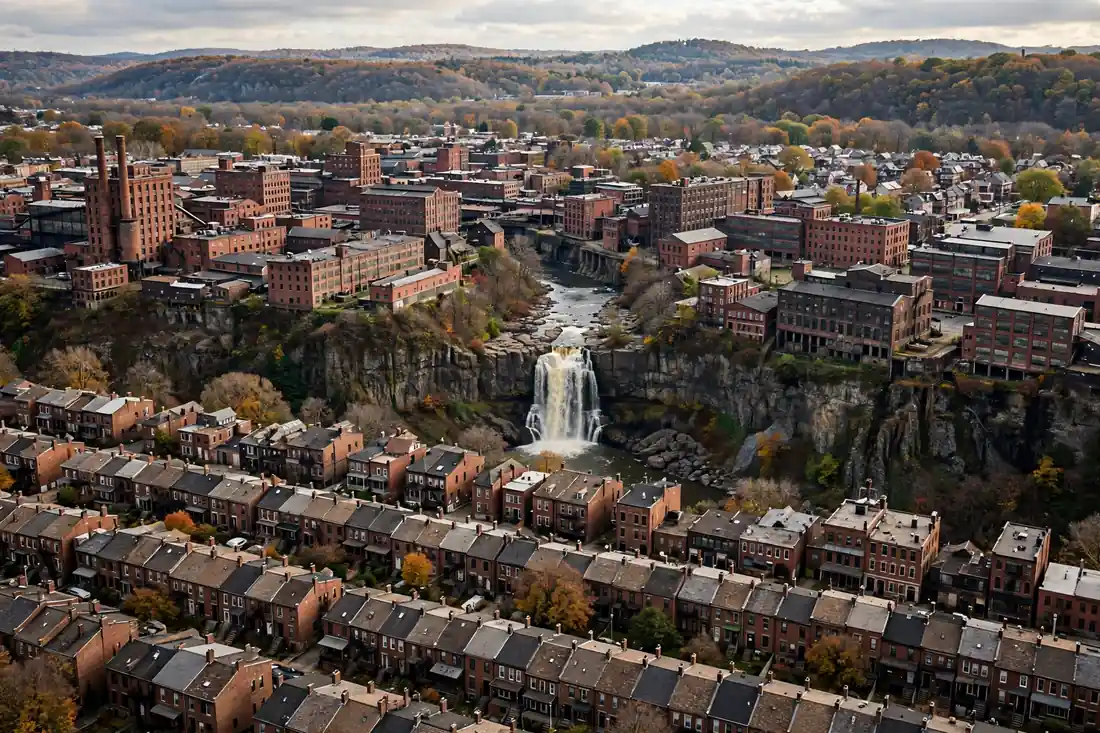
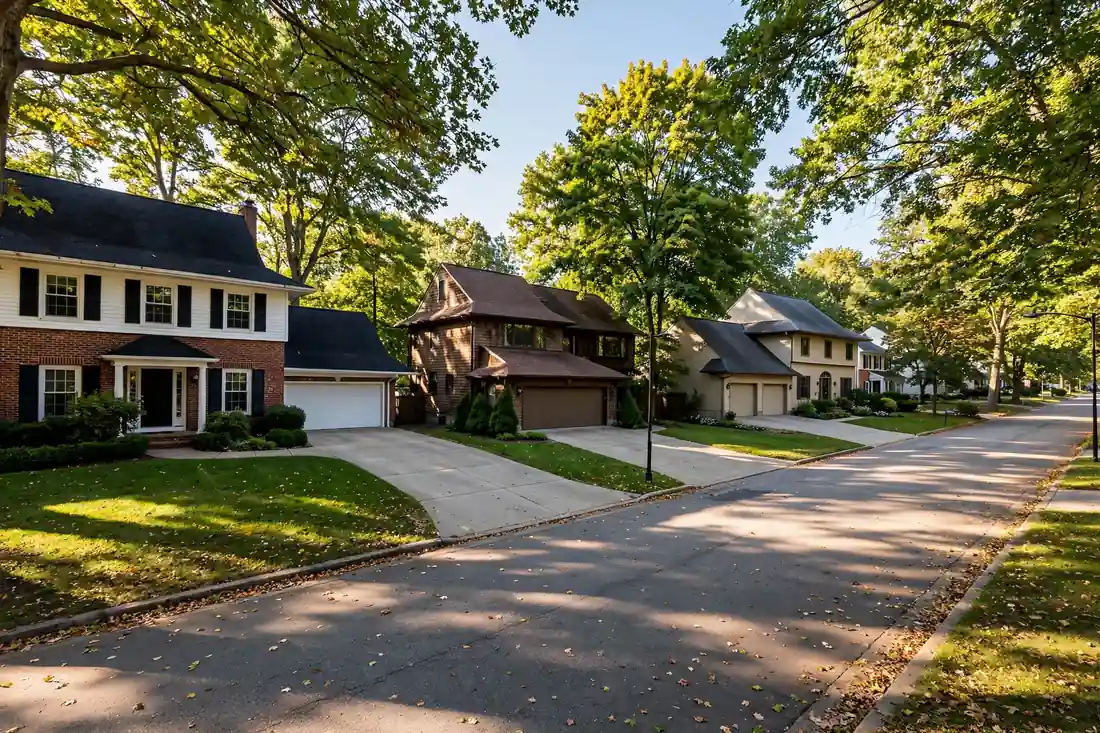
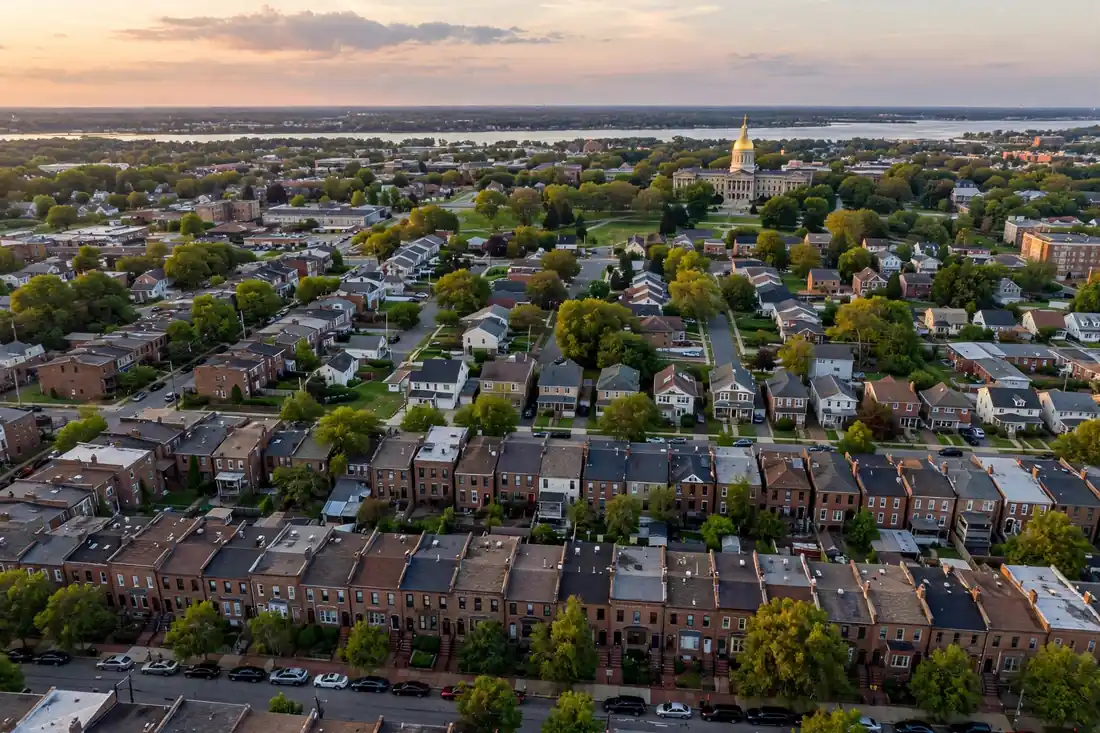
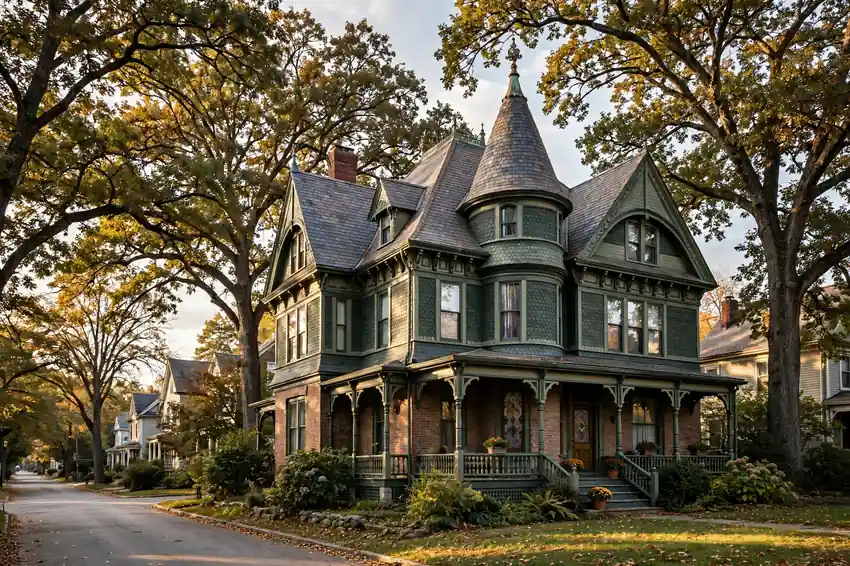
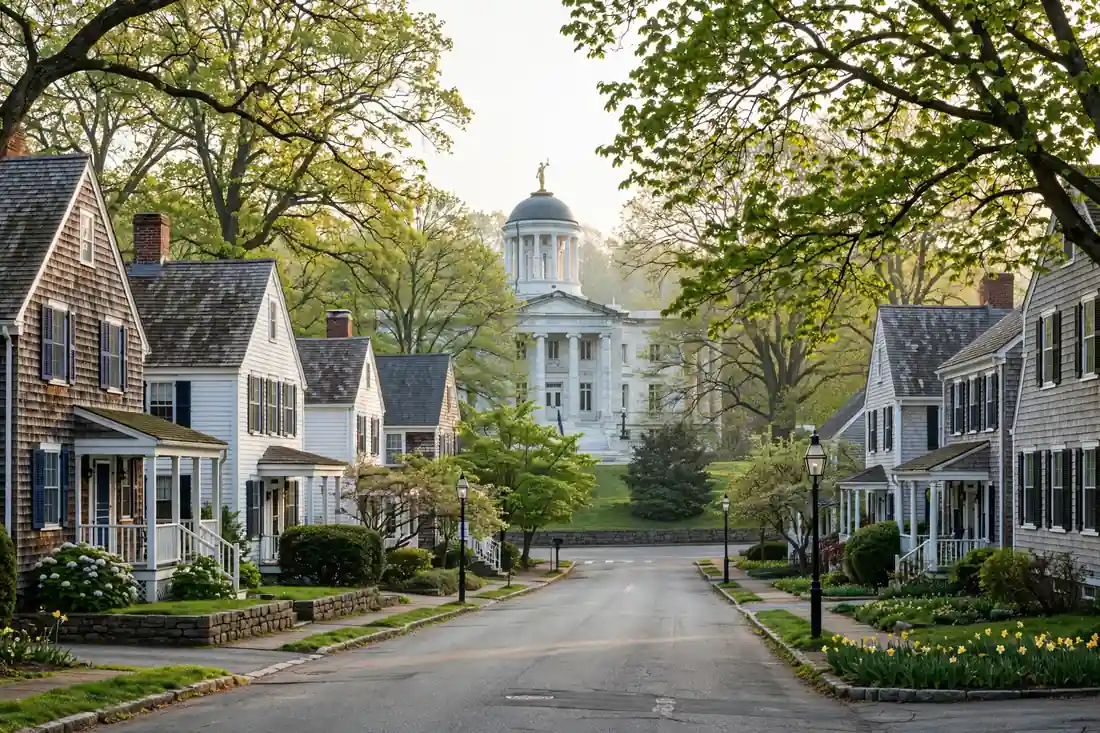
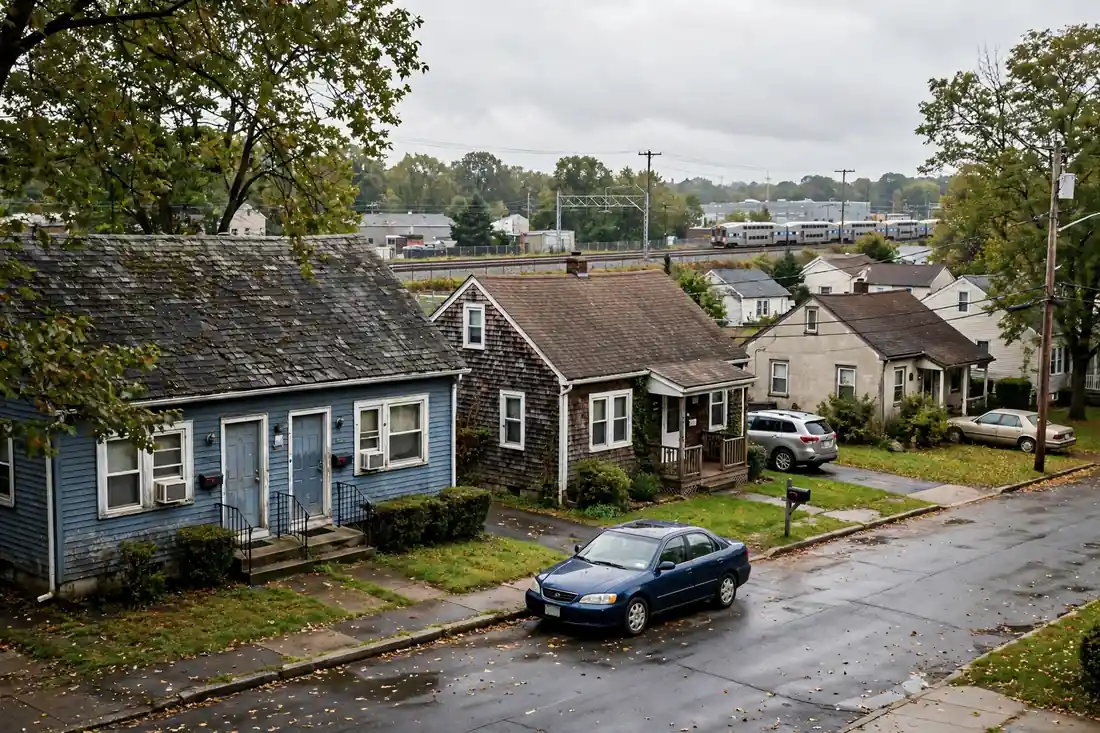
A roof surface at end of life
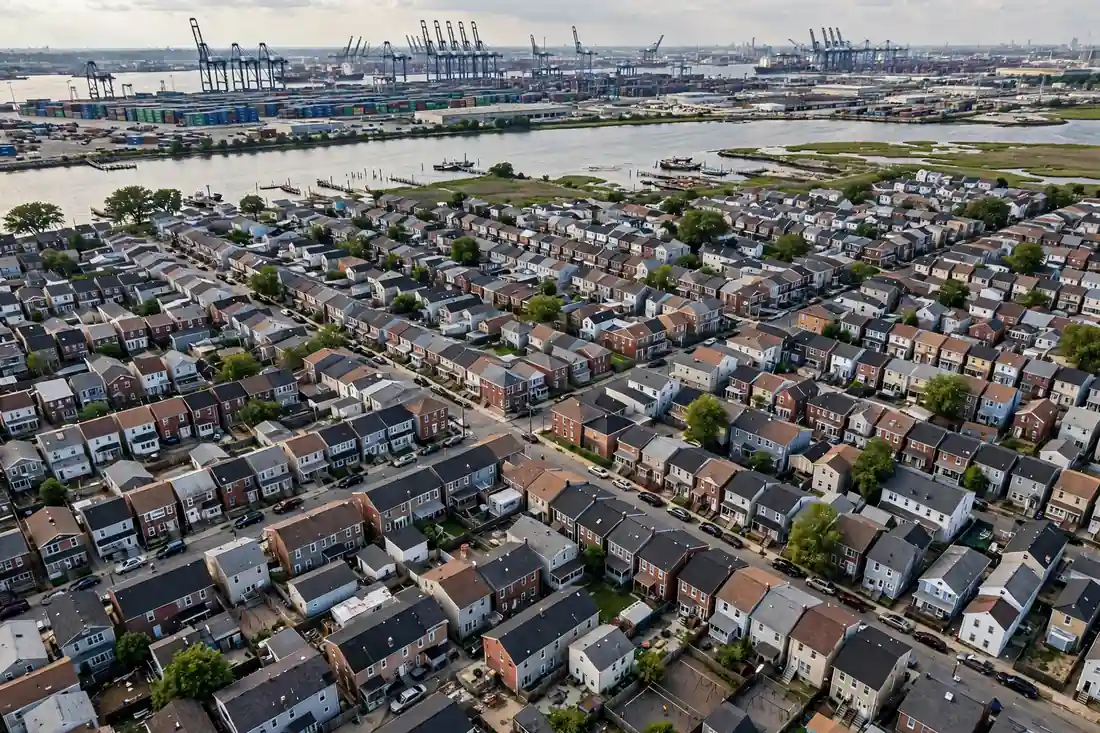
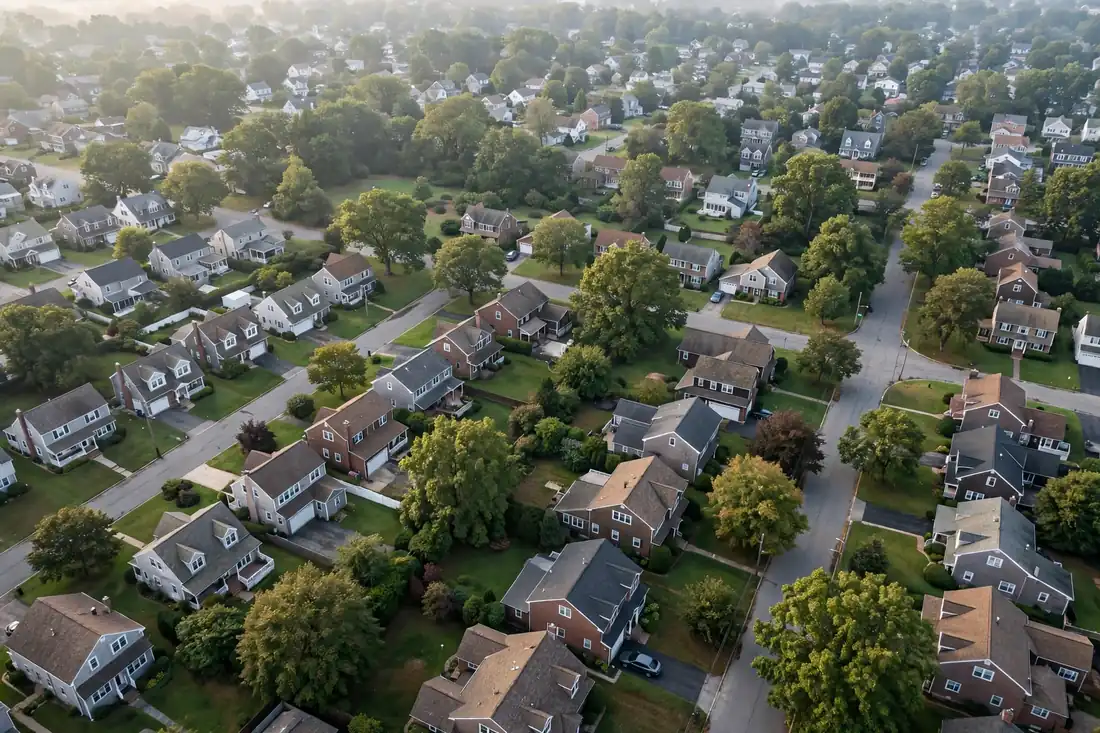
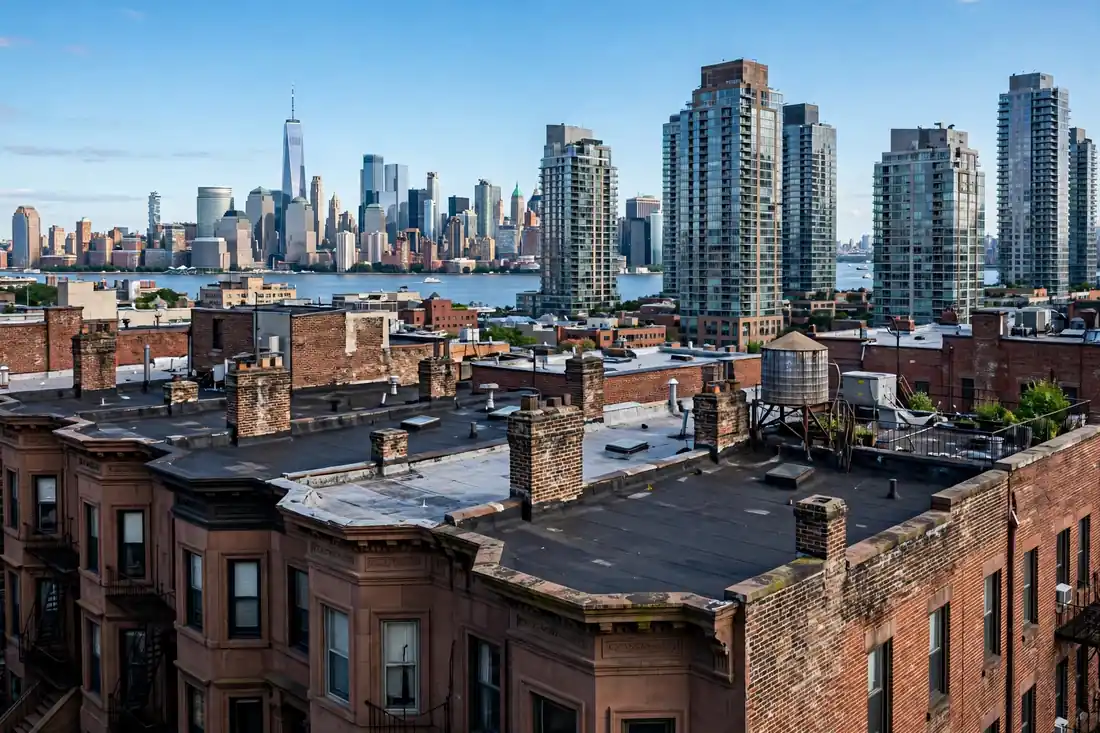
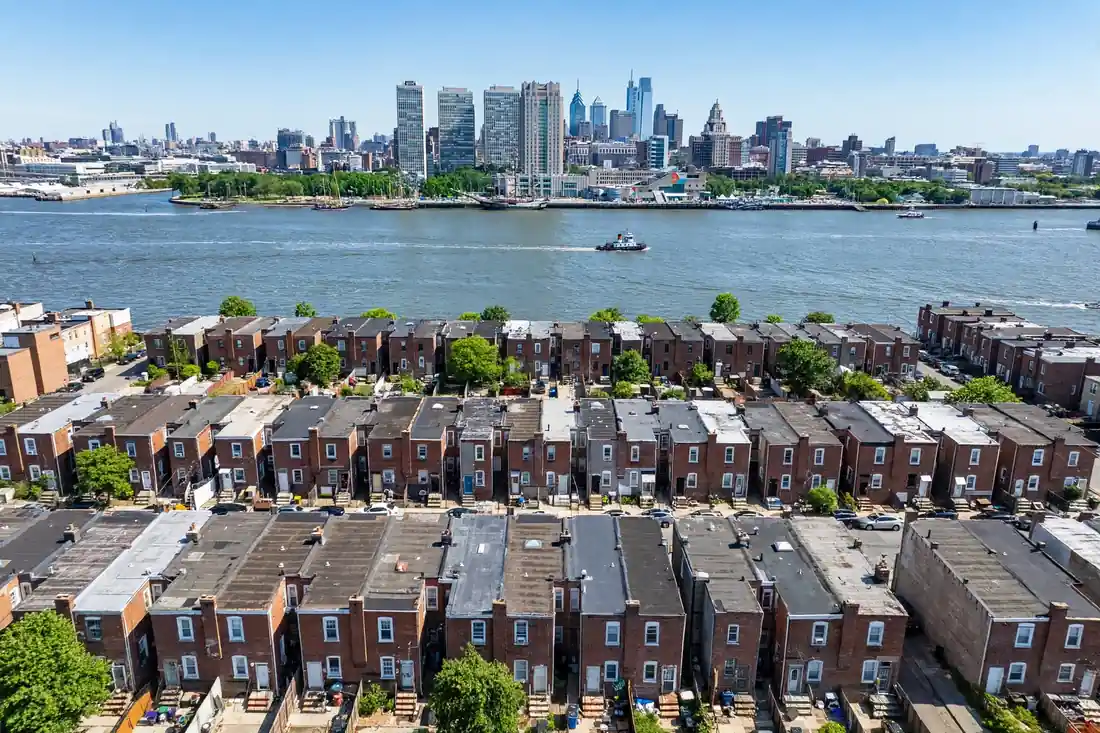
Granule loss, brittleness, and curling across the slopes mean the waterproofing layer itself is done, no matter how sound the house beneath it.
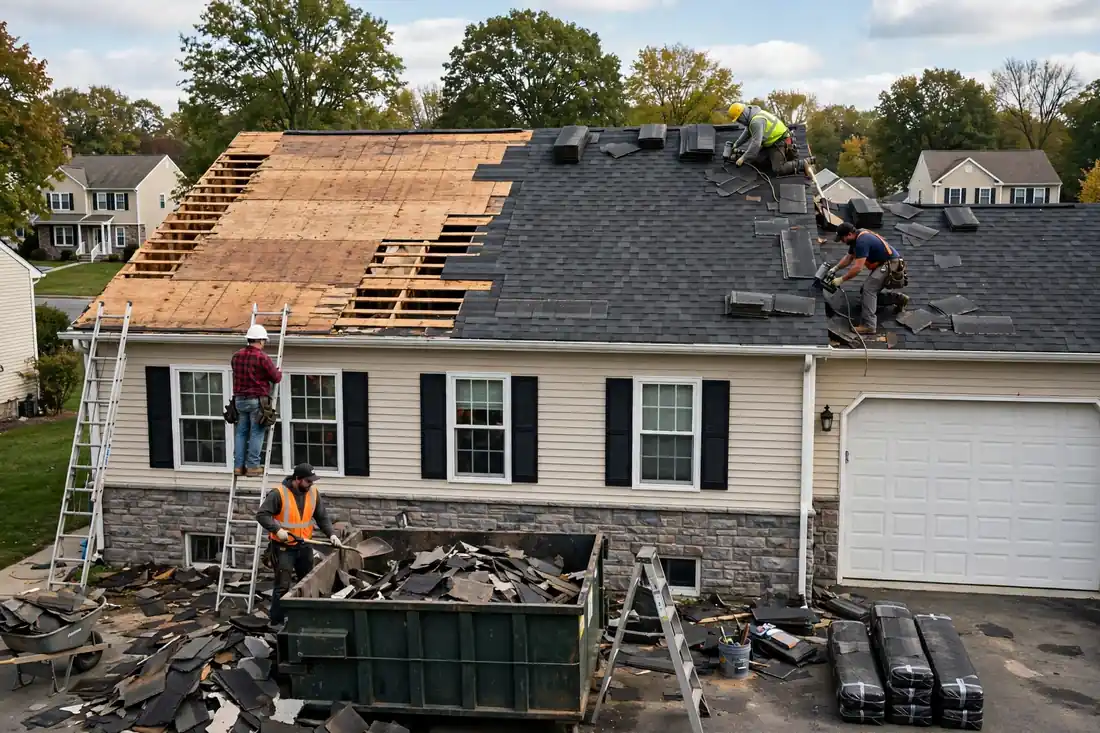
Full tear-off and re-roofing for New Jersey homes whose shingles have reached the end of their service life — deck inspection, modern underlayment, and a roof built for nor'easters and freeze-thaw.
Active leak, storm damage, or a section open to the weather — call now and describe what you are seeing. You will be connected with a local roofing professional.
Every asphalt roof reaches a point where repairs stop making sense — the shingles have lost their granule surface, the edges curl no matter how often they are resealed, and each storm finds a new weak spot. Roof replacement is the reset: the old roof comes off down to the deck, the wood is inspected and repaired where needed, and a complete new roofing system goes on, built to current standards for ventilation, ice protection, and wind resistance.
Done well, a replacement ends the cycle of patch-and-worry for a generation. The local roofing professionals in this network treat the tear-off as the most informative day in a roof's life — the one chance to see the deck, the flashing details, and the ventilation as they really are, and to correct every weakness the old roof hid. What follows is a roof whose every layer you know, because you watched it go on.
One leak is a repair. A second and third leak in different parts of the roof say the whole surface is failing, not one detail — and each repair now buys less time than the last.
When shingles cup at the edges, crack across the surface, and shed their granules across whole slopes, the material itself is spent. No coating or patch restores flexibility that heat and age have taken.
Most asphalt roofs in New Jersey deliver twenty to twenty-five years of service. Past that range, with wear visible on several slopes, replacement planning beats emergency spending.
Dips between rafters point to decking that has soaked and weakened over years. That is structural information: the surface above it cannot be trusted, and the deck needs to be opened and seen.
Replacement starts with removal — all old shingles and underlayment come off, because a new roof laid over hidden rot inherits every problem beneath it. The exposed deck is inspected board by board; damaged sections are replaced, fasteners are checked, and the surface is made flat and sound. Along the eaves, an ice-and-water shield membrane goes down — essential in New Jersey, where ice dams push meltwater under shingles — followed by modern synthetic underlayment across the field of the roof.
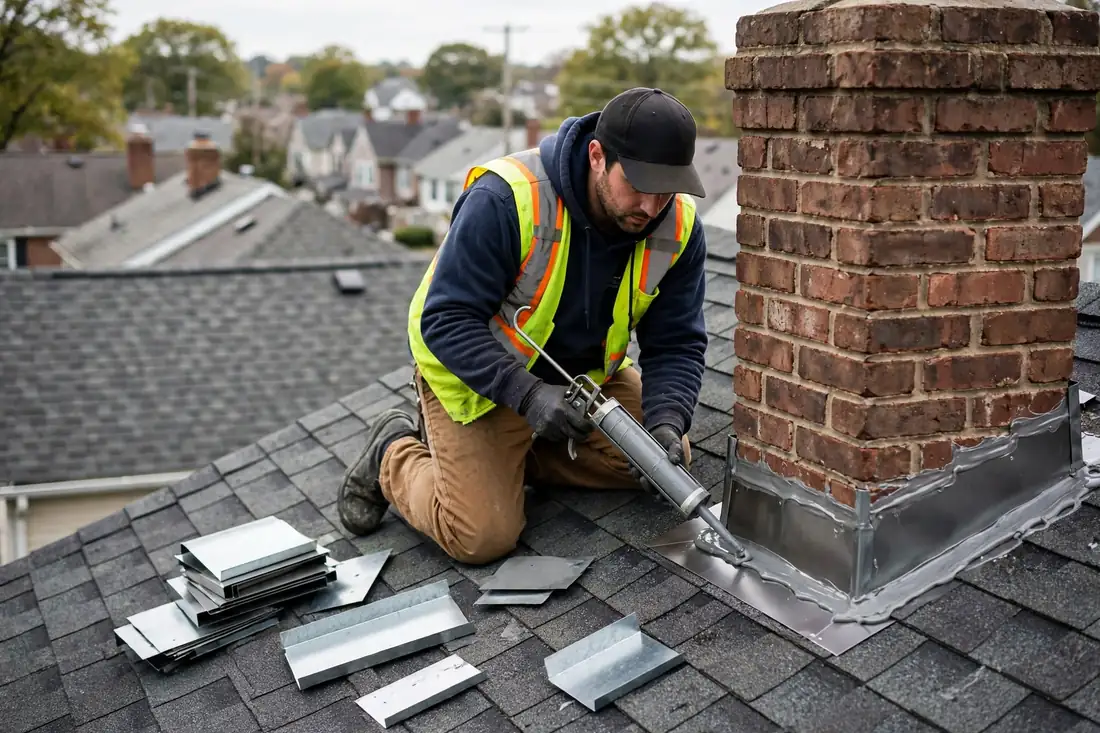
Then the system goes together: drip edge at the perimeter, starter courses, the shingle field woven through the valleys, flashing rebuilt at every chimney, wall, and penetration, ridge venting cut and capped to let the attic breathe, and new pipe boots at every vent. Each of those details is a place the old roof may have been quietly failing. A replacement is your one chance to get all of them right at once.
New Jersey asks more of a roof than milder climates do. A replacement here has to shrug off nor'easter winds that test every shingle's sealant bond, summer heat that ages south slopes early, and winter ice that dams at the eaves of the state's older housing stock. Material and detail choices follow from that: architectural shingles with strong wind resistance, generous ice-shield coverage at eaves and valleys, and ventilation sized for hot attics are standard practice for local roofers, not upgrades.
Township rules shape the job too. Many New Jersey municipalities require a permit for a full re-roof, and some historic districts — Plainfield's grand Victorians, parts of Newark and Trenton — carry rules about visible materials. Homeowner associations in the suburbs and shore communities may govern color and profile. A roofer who works your township knows which approvals to pull and in what order, so the project moves without a stop-work surprise mid-tear-off.
Granule loss, brittleness, and curling across the slopes mean the waterproofing layer itself is done, no matter how sound the house beneath it.
Years of slow leaks soften decking out of sight. Only a tear-off reveals it — and only replacement corrects it across the whole roof at once.
Older roofs often lack ice shield at the eaves and carry flashing that was marginal the day it was installed. Replacement rebuilds those details to current practice.
Trapped heat and moisture shorten a roof's life from below and drive ice dams in winter. Replacement day is when vents, baffles, and ridge lines get corrected.
A full replacement is the one project that addresses every layer at once:
Materials, tear-off, decking policy, flashing work, ventilation, and cleanup — spelled out so the finished roof can be checked against the promise.
The township permit where required, plus ground protection: tarps over plantings, plywood over windows near the tear-off zone, and a magnet sweep for nails at the end.
Deck repair, ice shield, underlayment, drip edge, shingles, flashing, and ridge — each visible in sequence if you want to watch your roof being built.
A ground-and-roof walkthrough with you, photos of the deck and flashing work, and the material documentation for your records.
The first weeks with a new roof have their own small checklist. A handful of loose granules in the gutters is normal as the surface sheds its manufacturing excess. Shingles may take a few warm weeks to seal fully flat — your roofer will tell you what to expect for the product installed. Keep the material and project documentation with your home records; it matters at resale and for any future service call.
After that, the new roof asks very little: a visual check each spring and fall, gutters kept clear, and branches trimmed back from the surface. The replacement resets the clock, but the habits that protect a roof protect the new one too — most of all, catching the rare early issue while it is still a one-visit fix.
A second layer hides deck rot, adds weight, traps heat, and voids the clean inspection a tear-off gives you. It saves a day and costs a decade.
Two scopes that look alike on paper differ in underlayment, ice shield, flashing, and ventilation. Compare the layers in writing, not just the totals.
A new roof over a badly vented attic ages early from beneath. Replacement day is the one easy moment to fix airflow — missing it repeats the old roof's story.
An unpermitted re-roof can complicate a sale or an insurance claim years later. The permit and final inspection belong in your home file.
Unprotected landscaping, siding, and AC units take the hits on careless jobs. Protection and daily cleanup are part of a professional scope.
Balanced airflow keeps the deck dry in winter and cooler in summer — the two conditions that decide how fast shingles age.
Branches off the roof, debris out of the valleys, and moss treated early in shaded sections. A clean roof drains the way it was designed to.
A professional look every few years — and after any major storm — catches the small failures while they are still small, on a roof with decades ahead of it.
The roofer measures, inspects the attic and deck condition indicators, and sets out the full scope in writing — materials, details, and what happens if decking is found damaged.
Shingles and components are ordered, the permit is pulled where required, and a weather window is chosen — tear-off never starts with heavy rain in the forecast.
Old roof off, deck repaired, new system on. Most New Jersey homes are dried-in the first day and finished within one to three days, weather allowing.
Debris hauled, grounds swept with magnets for nails, and a final walkthrough with photos and documentation handed over.
Local roofing professionals for roof replacement serve Newark and fifteen more New Jersey cities. Choose your city for local detail:
Most single-family homes in New Jersey are completed in one to three working days once the crew starts — tear-off and dry-in on day one for typical roofs, with larger or steeper homes taking longer. Weather is the main variable; a responsible roofer will not open a roof with heavy rain in the forecast.
Many townships require one for a full re-roof, and requirements vary by municipality. Your roofer should know your town's rules, pull the permit as part of the project, and schedule any inspection the town requires.
Tear-off is the sound choice: it exposes the deck for inspection and repair, lets modern underlayment and ice shield go down properly, and avoids the weight and heat problems of a doubled roof. A cover-over hides exactly the damage you most need to see.
Architectural (dimensional) asphalt shingles are the workhorse choice here — heavier, better sealed against wind uplift, and longer-lived than older three-tab shingles. Your roofer will match the product to your roof's pitch, exposure, and any association or historic-district rules.
Yes — most families do. Expect real noise during tear-off and installation hours, and plan for pets and small children to be somewhere calmer if the hammering bothers them. The crew needs driveway access for materials and the debris container.
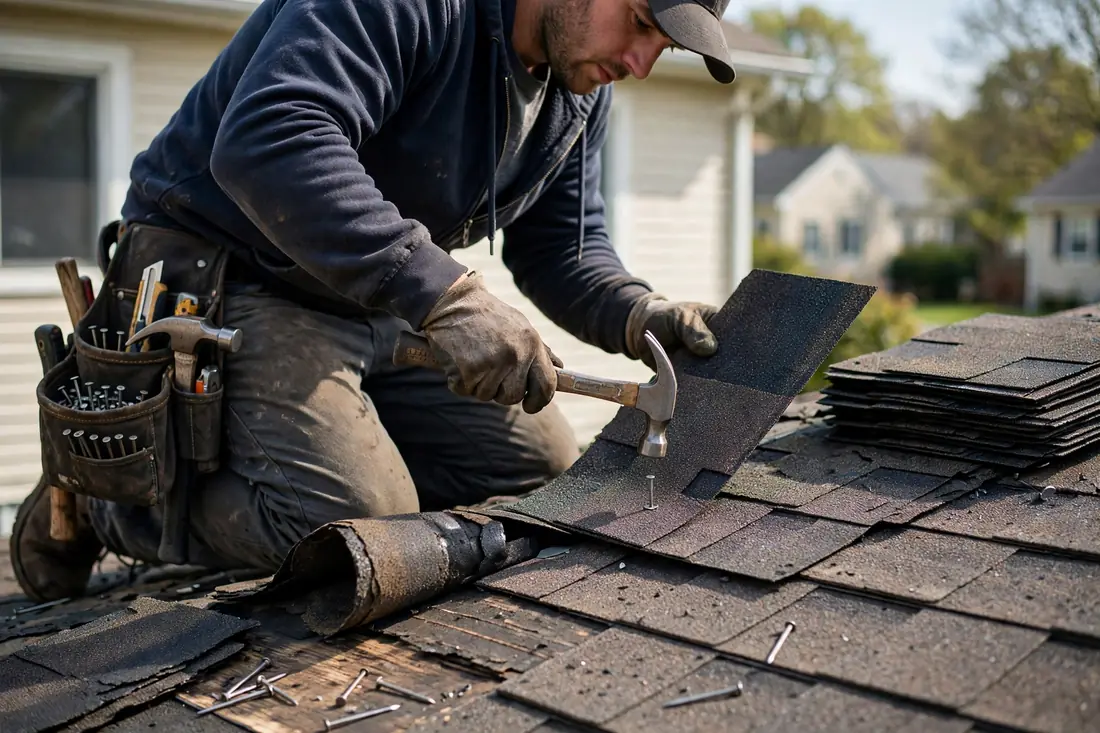
Targeted repairs for the failures New Jersey roofs actually develop — lifted shingles, tired flashing, worn pipe boots, and small leaks caught before they reach the ceiling.
Explore Roof Repair →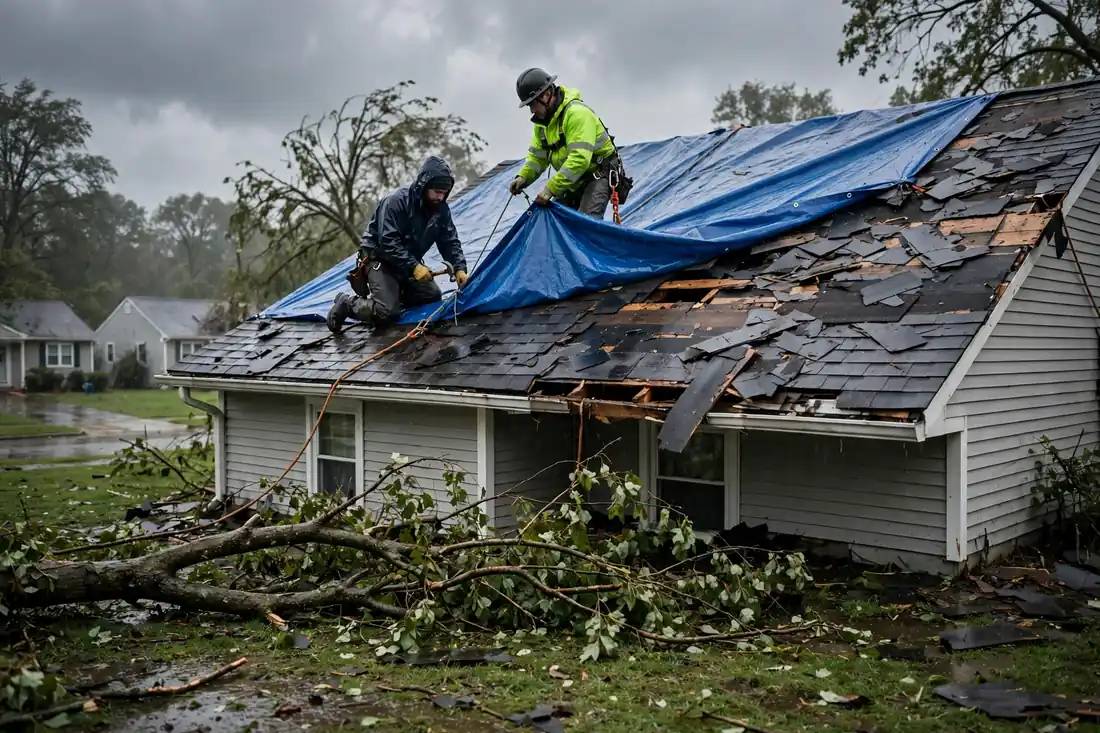
When a storm opens your roof — fallen limbs, torn-off shingles, active leaks — the first job is stopping the water. Emergency tarping, temporary sealing, and the permanent repair that follows.
Explore Emergency Roof Repair →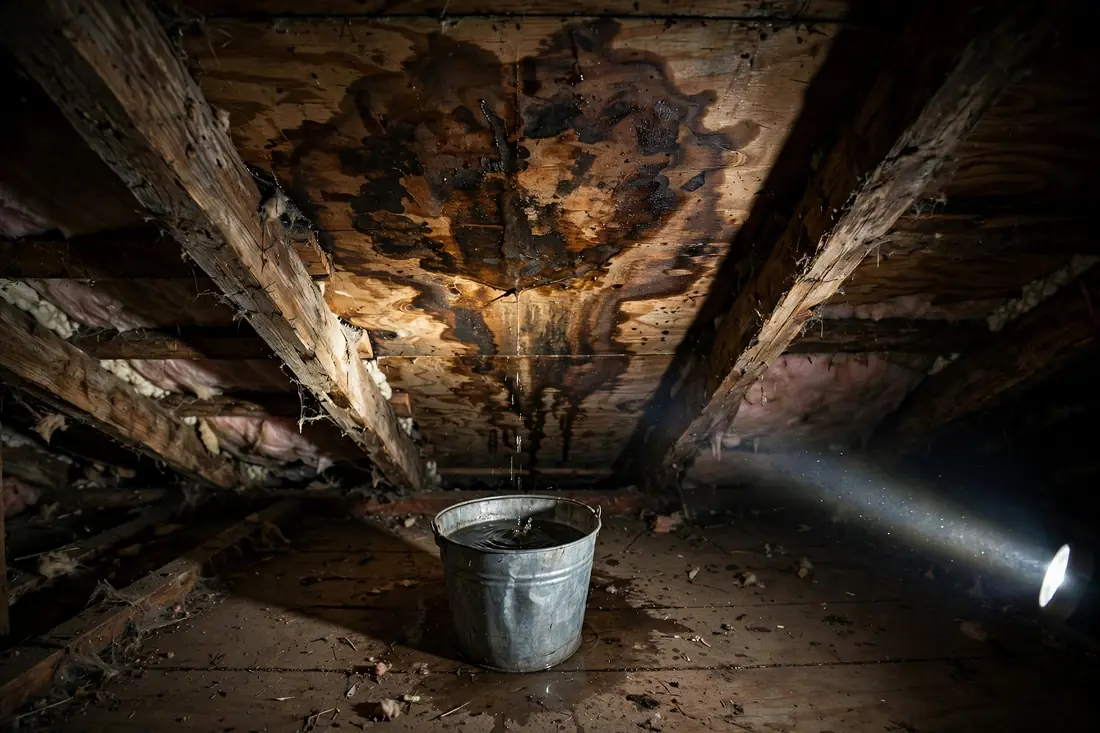
Leak detection and repair that starts where the water starts — tracing stains back through the attic to the failed flashing, boot, or seam that let the water in.
Explore Roof Leak Repair →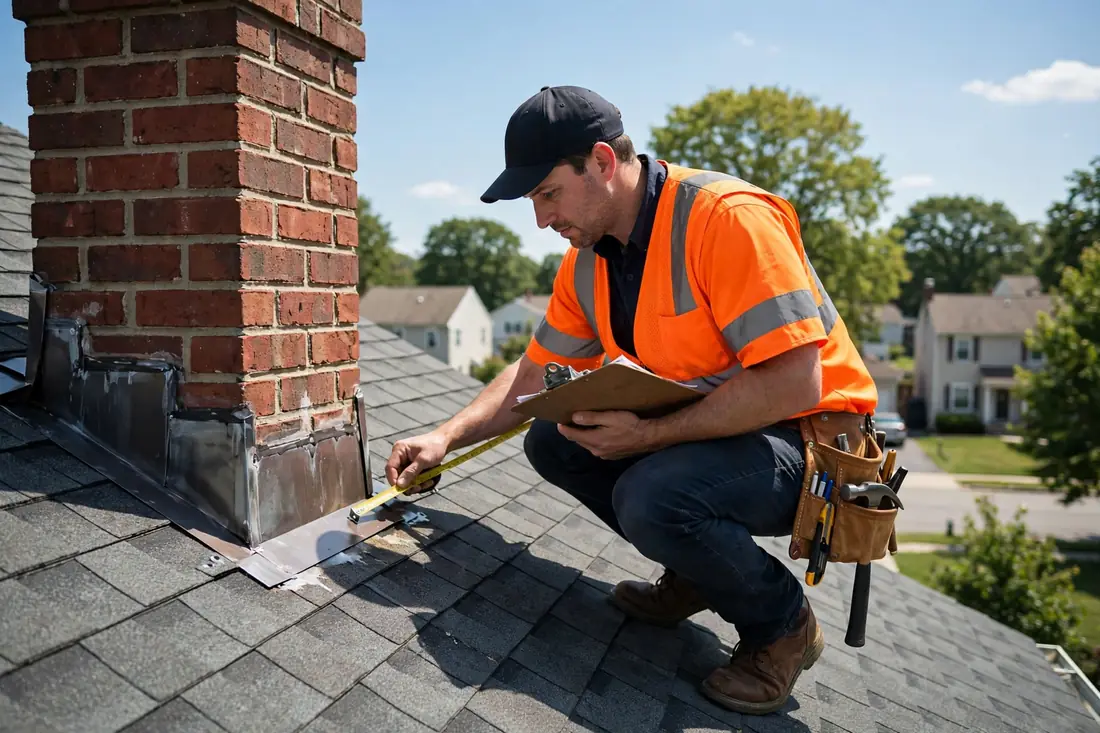
A full condition report for your roof — surface, flashing, deck indicators, attic, and ventilation — so repair, replacement, and storm decisions rest on evidence instead of guesses.
Explore Roof Inspection →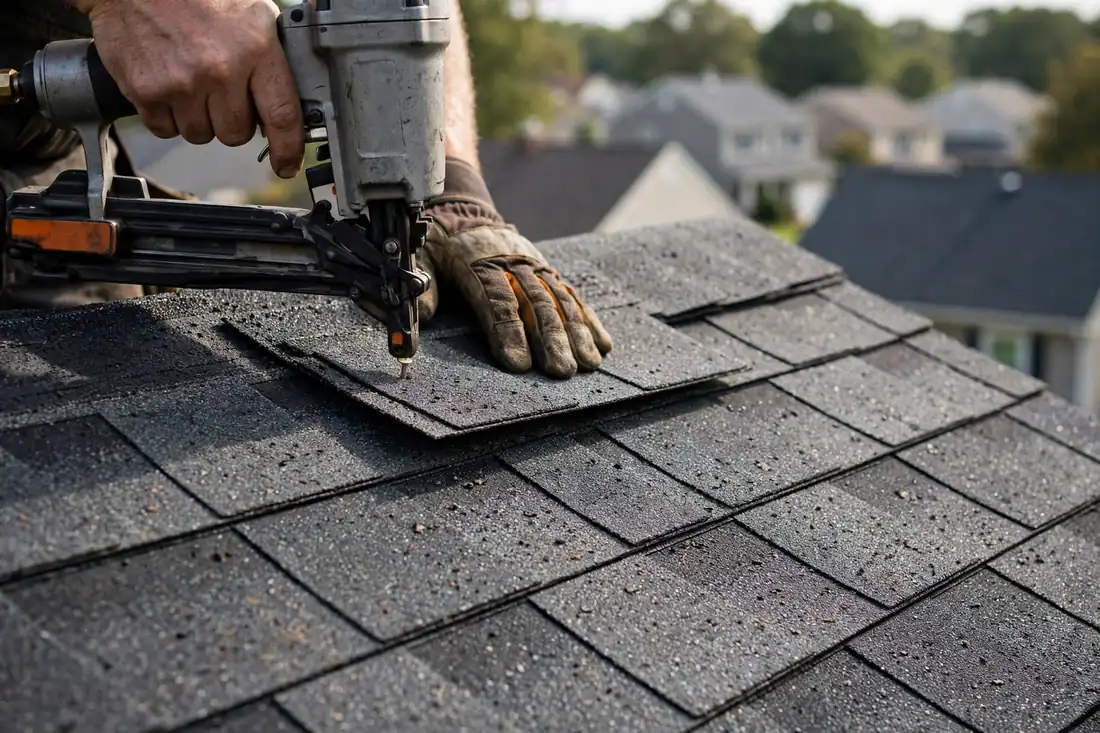
Architectural asphalt shingle installation and replacement — the workhorse roof for New Jersey homes, detailed for wind, ice, and summer heat, in the profiles and colors that suit each neighborhood.
Explore Shingle Roofing →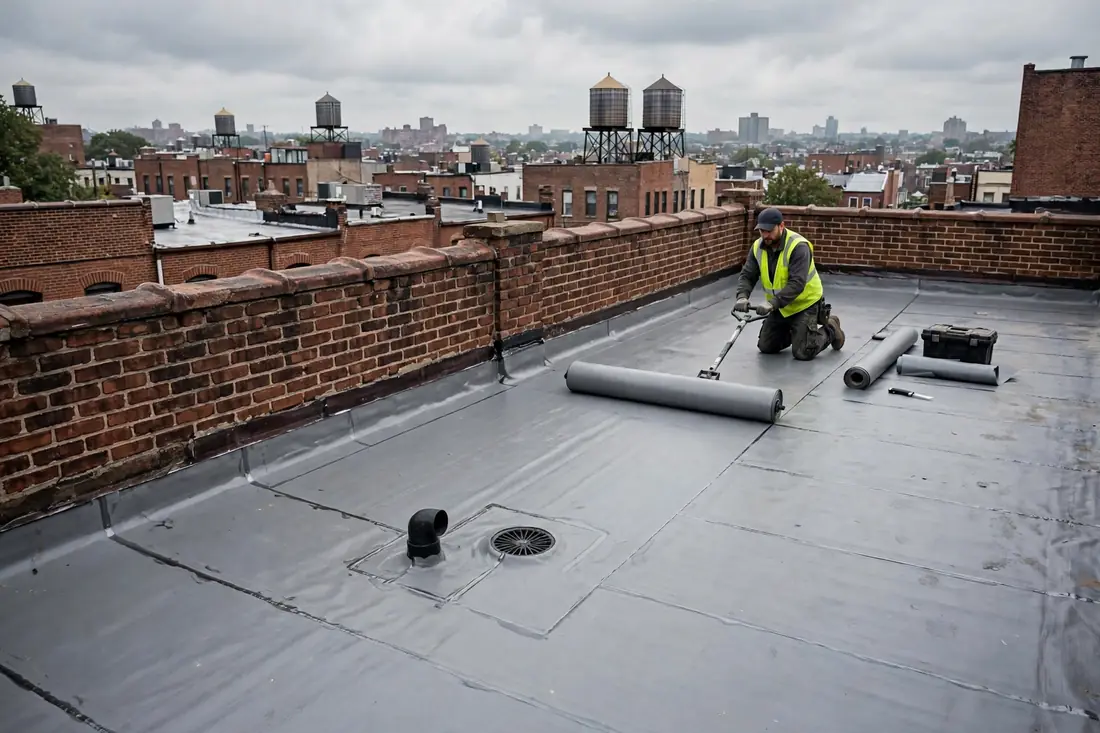
Membrane flat roofing for New Jersey's rowhouses, additions, porches, and low-slope sections — seams, drains, and ponding handled the way flat roofs actually demand.
Explore Flat Roofing →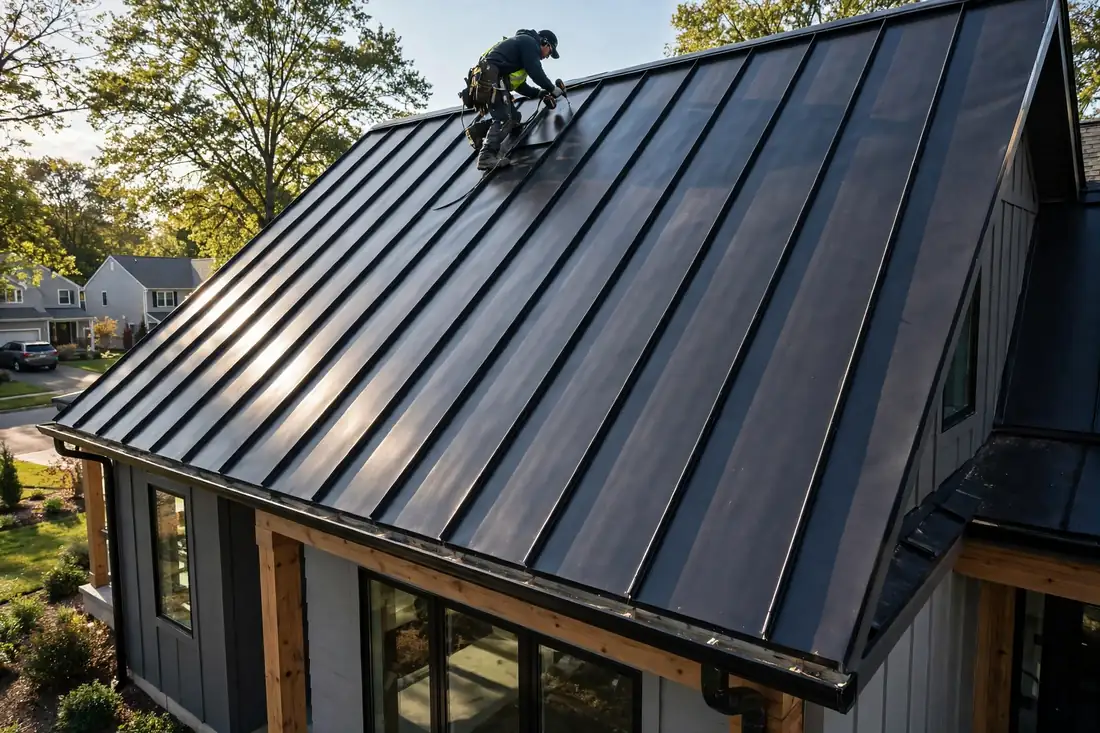
Standing seam and metal shingle roofing for New Jersey homes that want a decades-long roof — snow-shedding, wind-tough, and detailed around chimneys and valleys by craftsmen.
Explore Metal Roofing →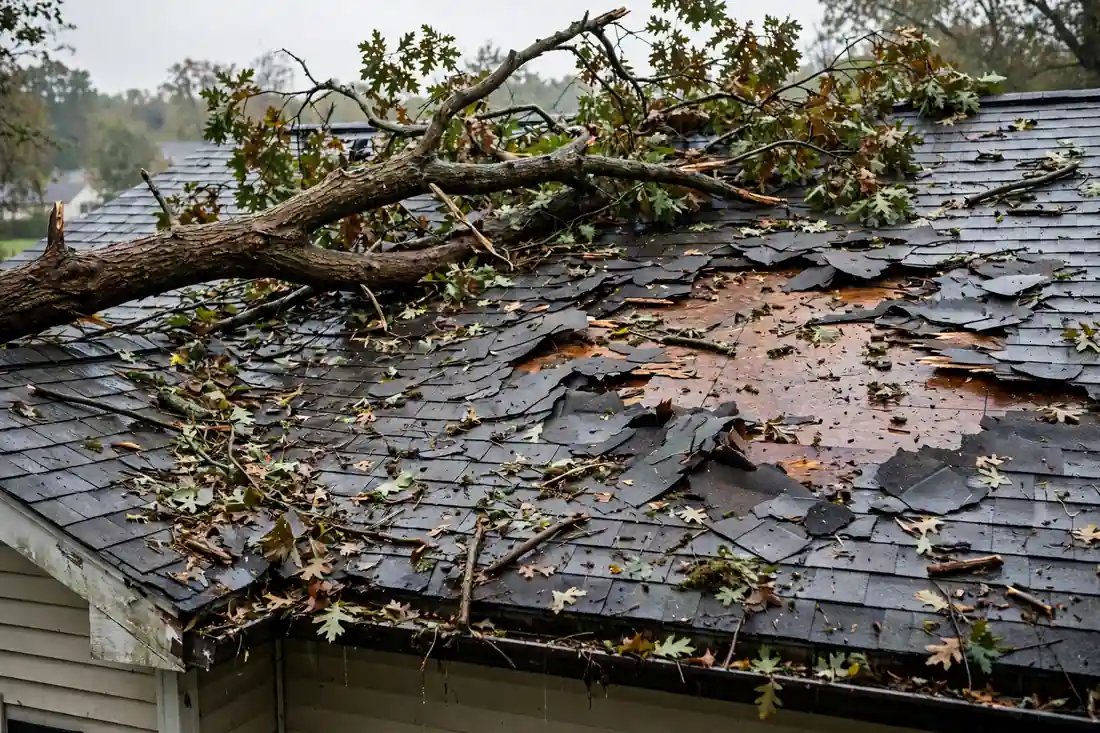
Post-storm roof repair for New Jersey homes — wind-torn shingles, fallen limbs, hail bruising, and water entry, documented properly and repaired permanently after the emergency pass.
Explore Storm Damage Roof Repair →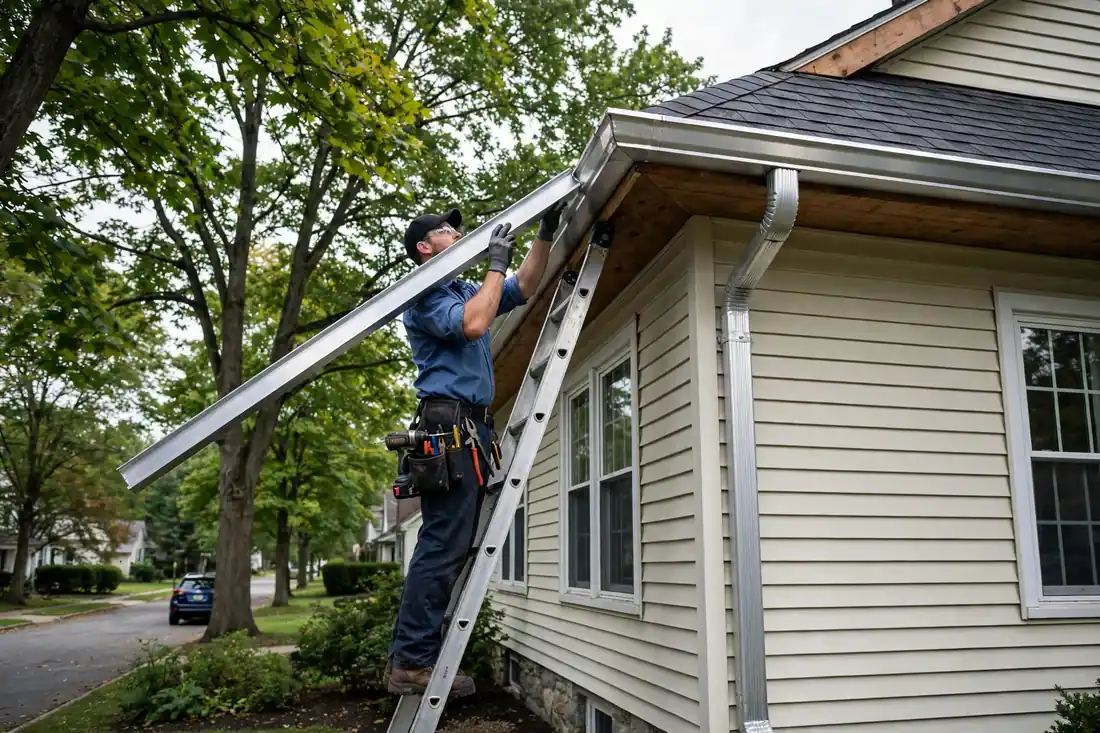
Seamless gutter installation and replacement sized to New Jersey roof lines — moving storm water off the roof and away from the foundation, with downspouts that actually keep up.
Explore Gutter Installation →One call connects you with a local New Jersey roofing professional — describe the roof, hear the plan, decide with evidence in hand.