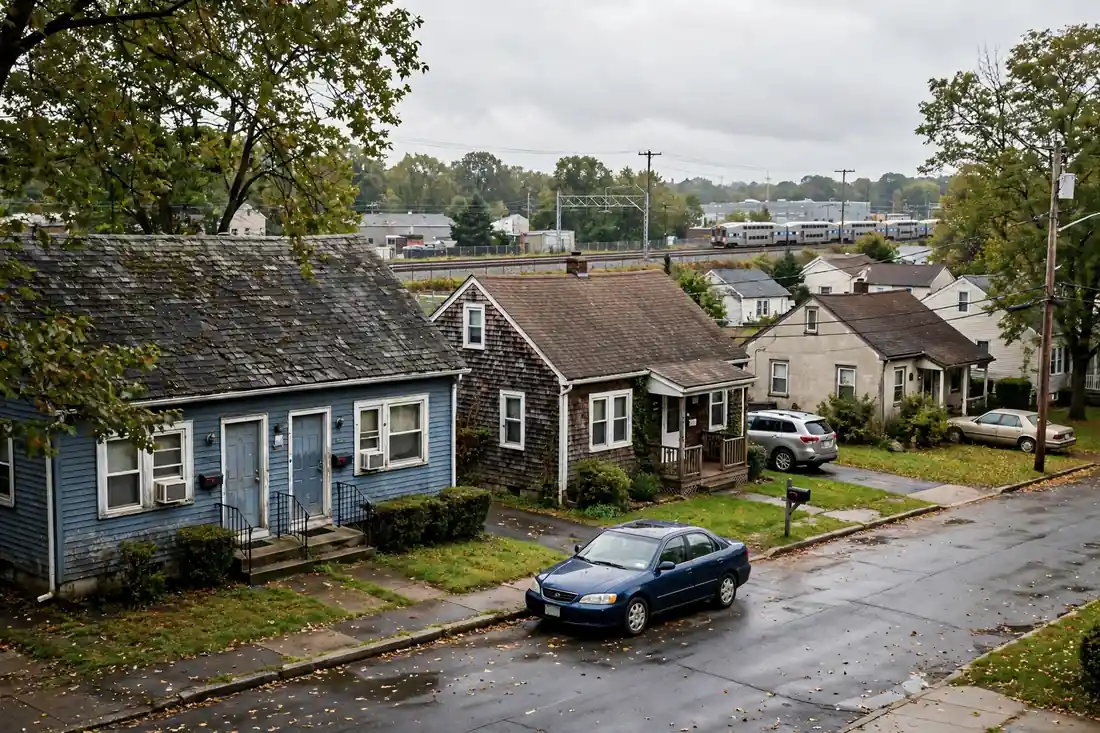
End-of-life shingle surface
When granules, flexibility, and seal are all spent, the roof's weather layer is finished even if no leak has shown yet this season.
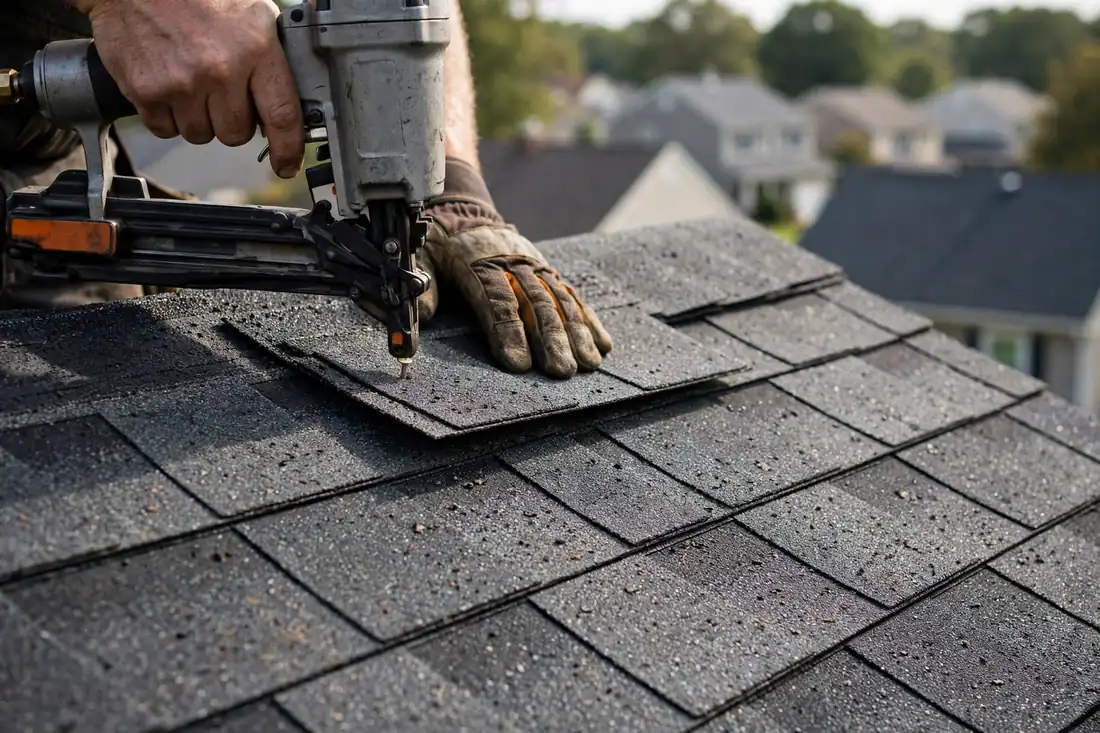
Architectural asphalt shingle installation and replacement — the workhorse roof for New Jersey homes, detailed for wind, ice, and summer heat, in the profiles and colors that suit each neighborhood.
Active leak, storm damage, or a section open to the weather — call now and describe what you are seeing. You will be connected with a local roofing professional.
Asphalt shingles roof the overwhelming majority of New Jersey homes, and for good reason: they handle the state's freeze-thaw winters, shed its heavy rains, and come in profiles that suit everything from a Newark twin to a shore colonial. Shingle roofing as a service means both installing new shingle roofs and renewing old ones — with the craft lying less in the shingles themselves than in the system beneath and around them: underlayment, ice protection, flashing, and ventilation.
The local roofing professionals in this network install architectural (dimensional) shingles as the standard — heavier, thicker, and far better sealed against wind uplift than the flat three-tab shingles on older roofs. This page covers how a shingle roof is chosen, built, and kept, and the details that separate a shingle roof that serves for decades from one that disappoints in ten years.
The gritty surface is the shingle's sunscreen and wear layer. When gutters and downspouts deliver it by the cupful, the asphalt beneath is exposed to the sun and aging fast.
Shingles that cup upward or curl under at the corners have lost their flexibility. They catch wind, crack in cold, and no longer seal to the course below.
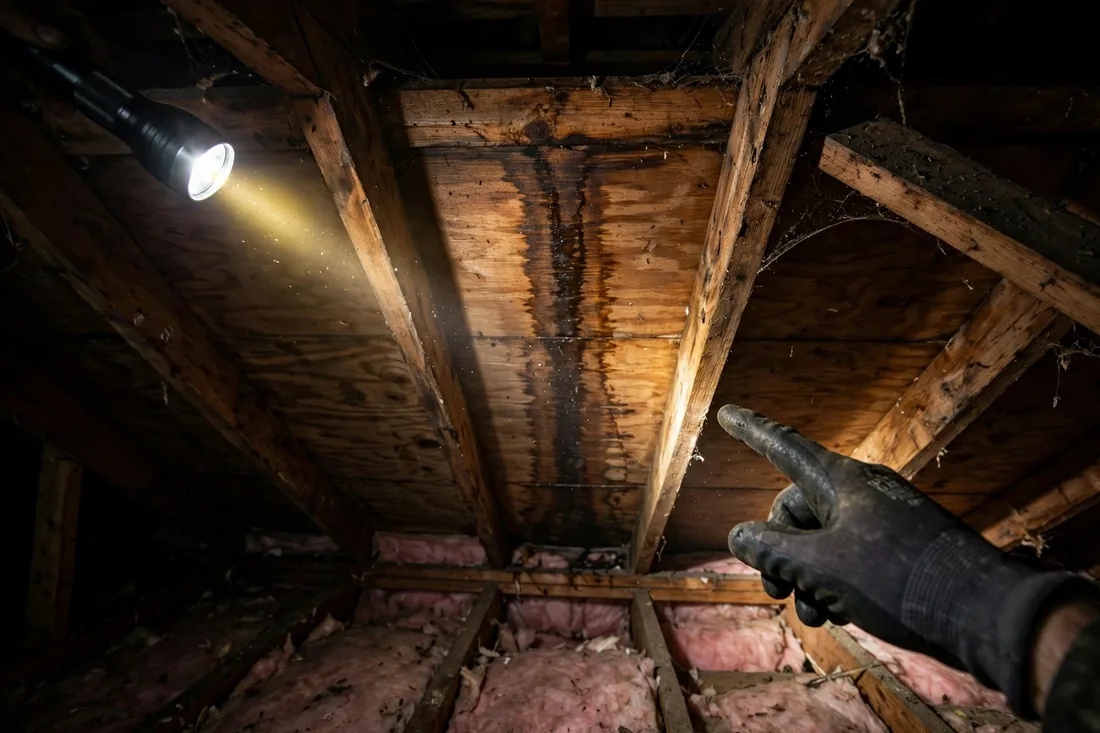
Where granules are gone entirely, the fiberglass mat shows through — a slope in that state is in its final seasons and staining often follows in the attic.
Decades of mismatched repairs across several slopes say the roof has been maintained past its material's life. A unified new surface ends the patch cycle.
A shingle roof is a water-shedding system, not a waterproof one — every course overlaps the next so gravity does the work, and every detail exists to keep that logic unbroken. Beneath the shingles, synthetic underlayment covers the deck, and a self-sealing ice-and-water membrane guards the eaves, valleys, and penetrations where water lingers. Starter courses seal the vulnerable first edge, drip edge directs water off the perimeter, and the ridge is both a cap and, in modern practice, the attic's exhaust vent.
The shingles themselves are fiberglass mats saturated with asphalt and surfaced with mineral granules. Architectural shingles laminate two layers for thickness, shadow lines, and heavier wind resistance; quality shows in the sealant strip that bonds each course to the next once the sun warms it. Installed to the maker's nailing pattern — the right count, in the right band — a shingle roof is a engineered surface, not a pile of rectangles.
New Jersey puts shingles through a full-contact year: nor'easter gusts that test sealant bonds, summer roof-surface temperatures that push past 150 degrees on south slopes, ice that dams at eaves, and shore salt air for the coastal counties. Local practice answers each: architectural shingles with strong wind resistance as the default, ice shield carried well up the eaves past the interior wall line, and ventilation sized so summer attic heat does not cook the roof from below.
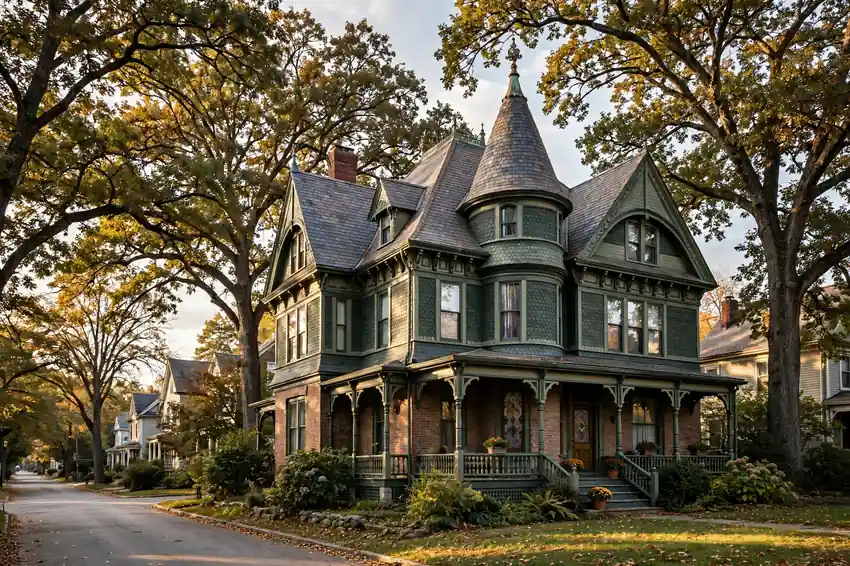
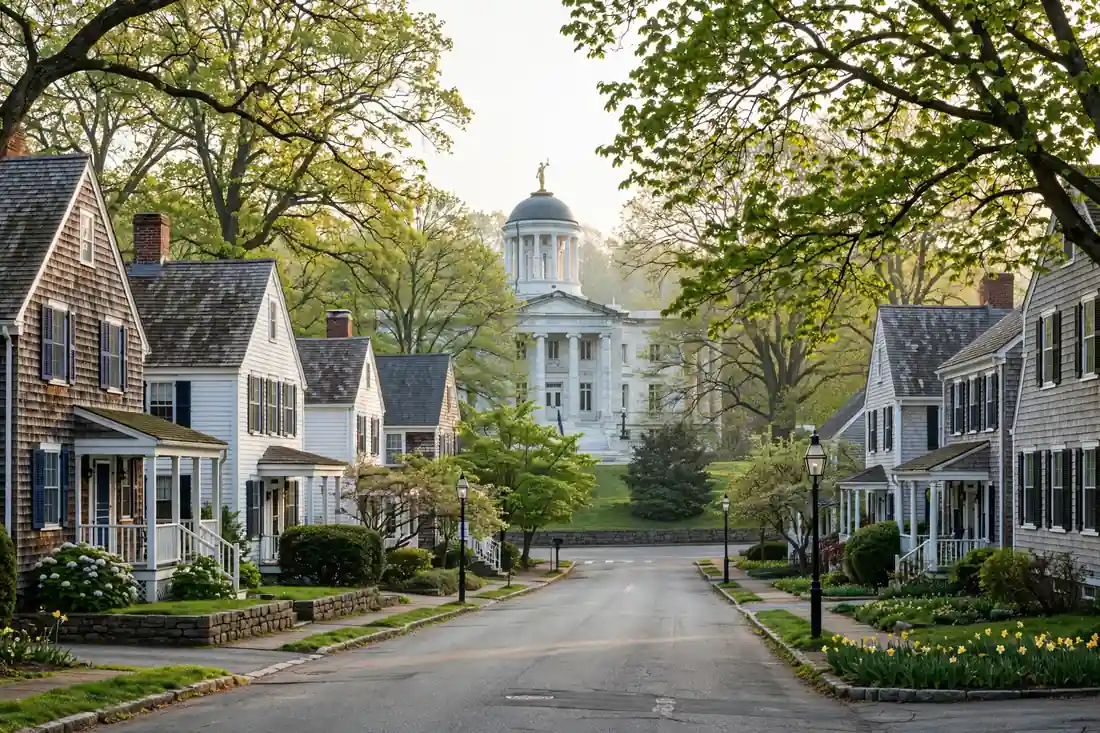
Neighborhood character matters too. The slate-look profiles suit Plainfield's Victorians; weathered-wood tones fill the suburbs of Middlesex and Somerset; shore towns lean to lighter colors that reflect heat. Historic districts and associations in several townships regulate visible choices — a local installer knows which streets carry rules before the samples come out, so the roof you pick is the roof you are allowed to keep.
When granules, flexibility, and seal are all spent, the roof's weather layer is finished even if no leak has shown yet this season.
Aged sealant strips and lighter three-tab shingles lift in nor'easter gusts; one lifted edge is the doorway to a torn section.
Without modern ice shield at the eaves, winter meltwater backs under the first courses of older shingle roofs across the state's cold belt.
South and west slopes age years ahead of shaded ones; a roof can be half-spent and half-sound, which a slope-by-slope plan handles honestly.
A properly built shingle roof renews every layer of the system:
Which slopes are spent, which have life, what the deck and ventilation look like — so the scope fits the roof you actually have.
Shingle line and profile, underlayment, ice shield coverage, flashing scope, and ventilation — in writing, before the work is scheduled.
Old layers removed, deck inspected and repaired, and the surface made true before the first new course lands.
Nailing count and placement, course alignment, valley and flashing work — the craft details that decide how the roof ages.
New shingles shed a modest amount of loose granules in their first weeks — normal manufacturing excess, not wear. Courses seal flat as warm days activate the sealant strips; your installer will note what to expect through the first season. Keep the product and project documentation with your home records: it identifies the exact shingle for any future repair match and supports resale conversations.
From there, a shingle roof asks for rhythm, not effort: keep gutters flowing, branches off the surface, and a professional eye on it every few years. The details installed with it — boots, flashing, sealant points — will want attention long before the shingles do, and catching them on schedule is how a shingle roof reaches its full service life.
Too few nails, or nails placed above the sealant band, are invisible the day of install and decisive in the first big wind. The pattern is the engineering.
In New Jersey's ice-dam belt, eave membrane is not an upgrade — it is the difference between a dry February and a ceiling claim.
A second layer traps heat, hides deck condition, and telegraphs every old imperfection through the new surface. Tear-off is the honest foundation.
Shingle colors read differently at roof scale in daylight. Full-size samples against the house, in sun and shade, prevent a twenty-year regret.
Cooking new shingles from a hot, unvented attic repeats the old roof's early aging. The ridge and soffit plan belongs in every shingle scope.
Clean gutters and clear valleys keep water flowing off the system instead of ponding at its seams and edges.
Overhanging branches abrade granules and drop debris; moss on shaded slopes holds moisture against the surface. Both are manageable, early.
Boots, flashing sealant, and vent caps age in ten to fifteen years — half a shingle roof's life. Mid-life detail service is the simplest longevity there is.
The roofer measures and inspects, then walks you through profiles and colors with full-size samples at your house, plus the layer-by-layer scope in writing.
Old roofing removed, deck inspected and repaired, surfaces prepared — the one day the whole truth about your roof is visible.
Ice shield, underlayment, drip edge, shingle field, flashing, and ridge go on in sequence — most homes dried-in day one, finished in one to three days.
Grounds swept and magnet-checked for nails, final walkthrough, and the material documentation handed over for your records.
Local roofing professionals for shingle roofing serve Newark and fifteen more New Jersey cities. Choose your city for local detail:
Properly installed on a ventilated deck, architectural shingles commonly serve twenty-five years and beyond in this climate. South-facing slopes and hot attics shorten that; shade, ventilation, and detail maintenance lengthen it. The honest answer for your roof comes from its exposure, which an inspection reads directly.
Three-tab shingles are a single flat layer with cut-out slots — the older, lighter standard. Architectural shingles laminate two layers, giving a thicker, more dimensional surface, better wind resistance, and longer service. It is why they have become the default for replacement across the state.
They can in some cases, but it is rarely the wise choice: the old surface hides deck condition, adds weight and heat, and shortens the new roof's life. Tear-off exposes and corrects the deck — the foundation everything else depends on.
Look at full-size samples against your siding in daylight, consider the roof's share of your home's appearance (it is often a third of what the street sees), and check any association or historic-district rules first. Your roofer will flag which local streets carry color rules.
The shingles need the attic beneath them ventilated. Balanced intake at the soffits and exhaust at the ridge keep the deck dry in winter and cooler in summer — protecting both the shingles' lifespan and your eaves from ice dams.
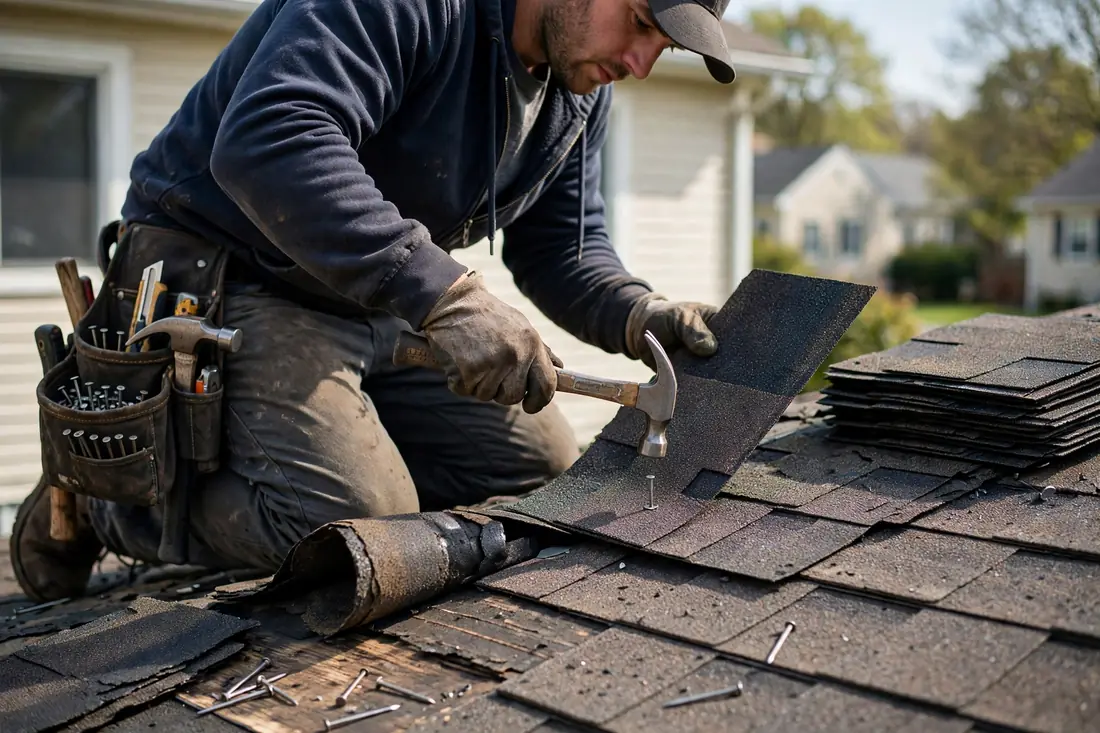
Targeted repairs for the failures New Jersey roofs actually develop — lifted shingles, tired flashing, worn pipe boots, and small leaks caught before they reach the ceiling.
Explore Roof Repair →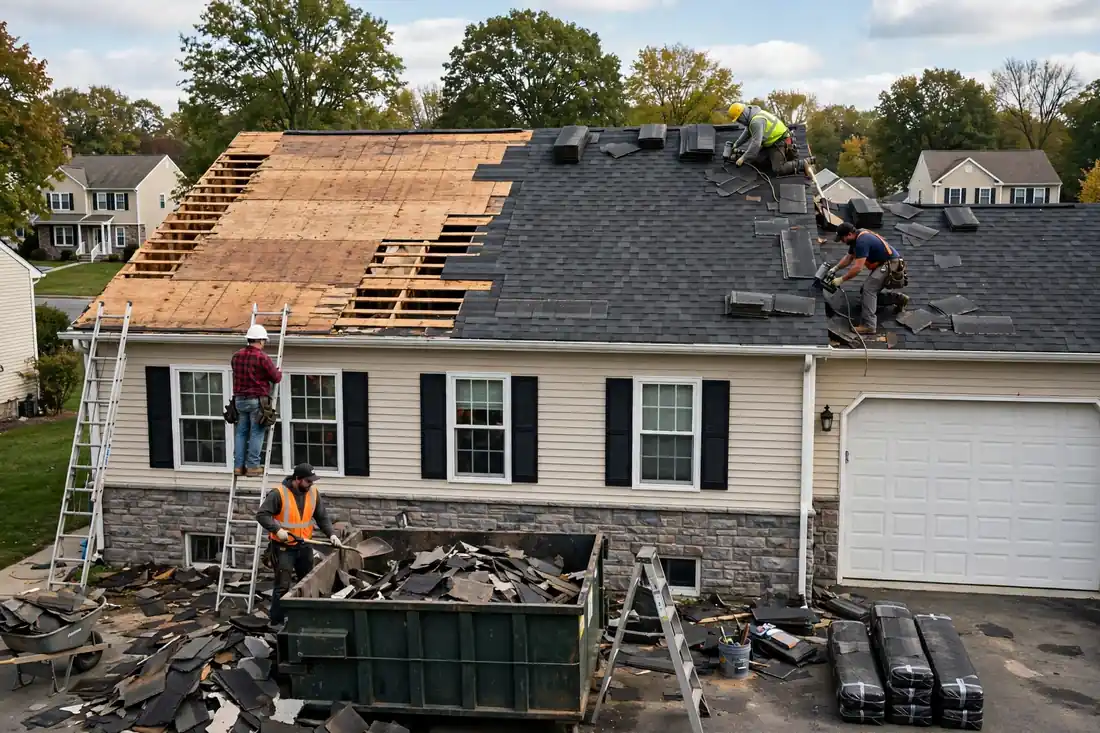
Full tear-off and re-roofing for New Jersey homes whose shingles have reached the end of their service life — deck inspection, modern underlayment, and a roof built for nor'easters and freeze-thaw.
Explore Roof Replacement →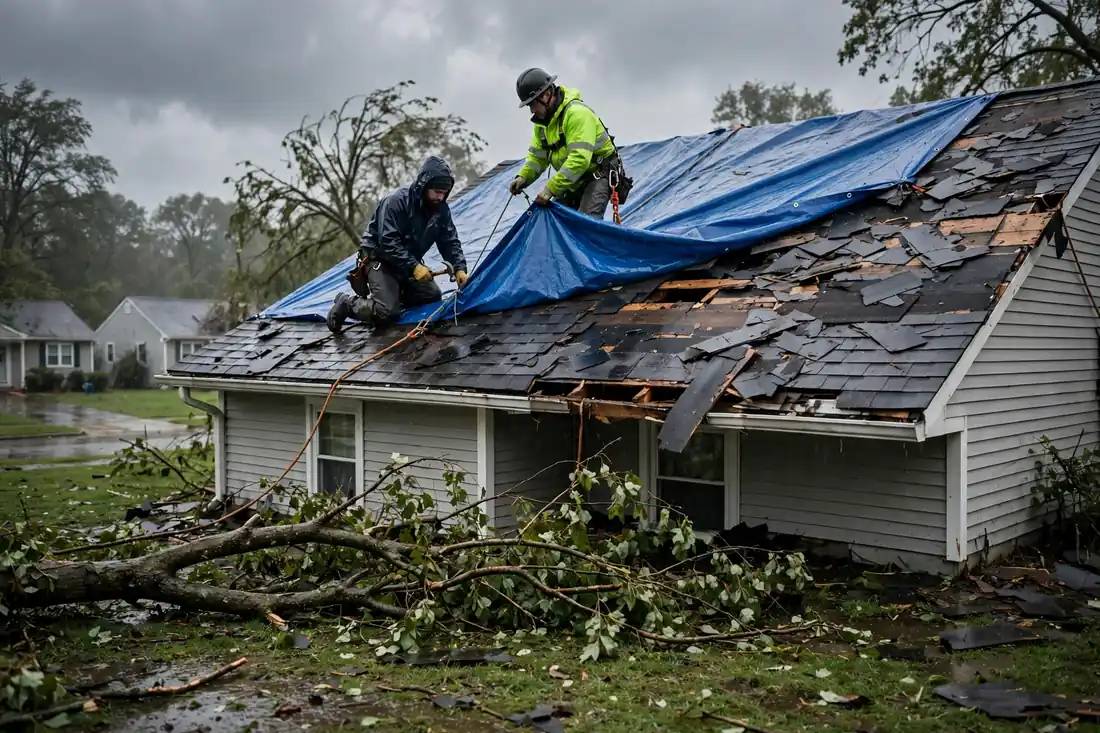
When a storm opens your roof — fallen limbs, torn-off shingles, active leaks — the first job is stopping the water. Emergency tarping, temporary sealing, and the permanent repair that follows.
Explore Emergency Roof Repair →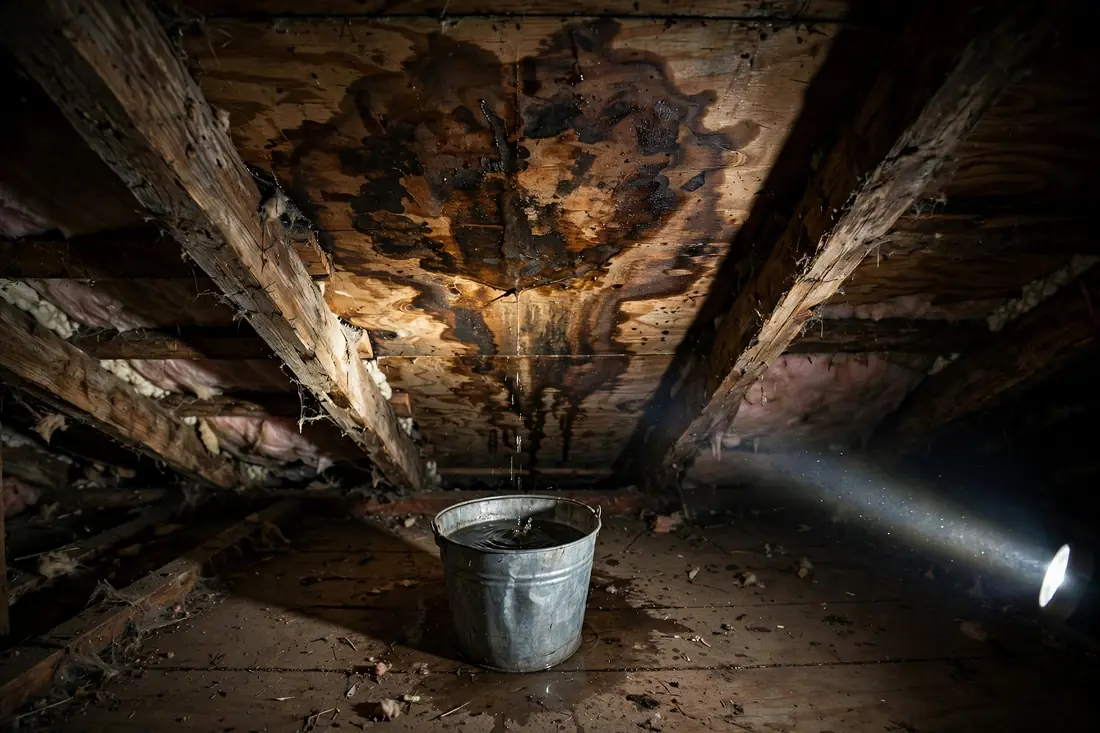
Leak detection and repair that starts where the water starts — tracing stains back through the attic to the failed flashing, boot, or seam that let the water in.
Explore Roof Leak Repair →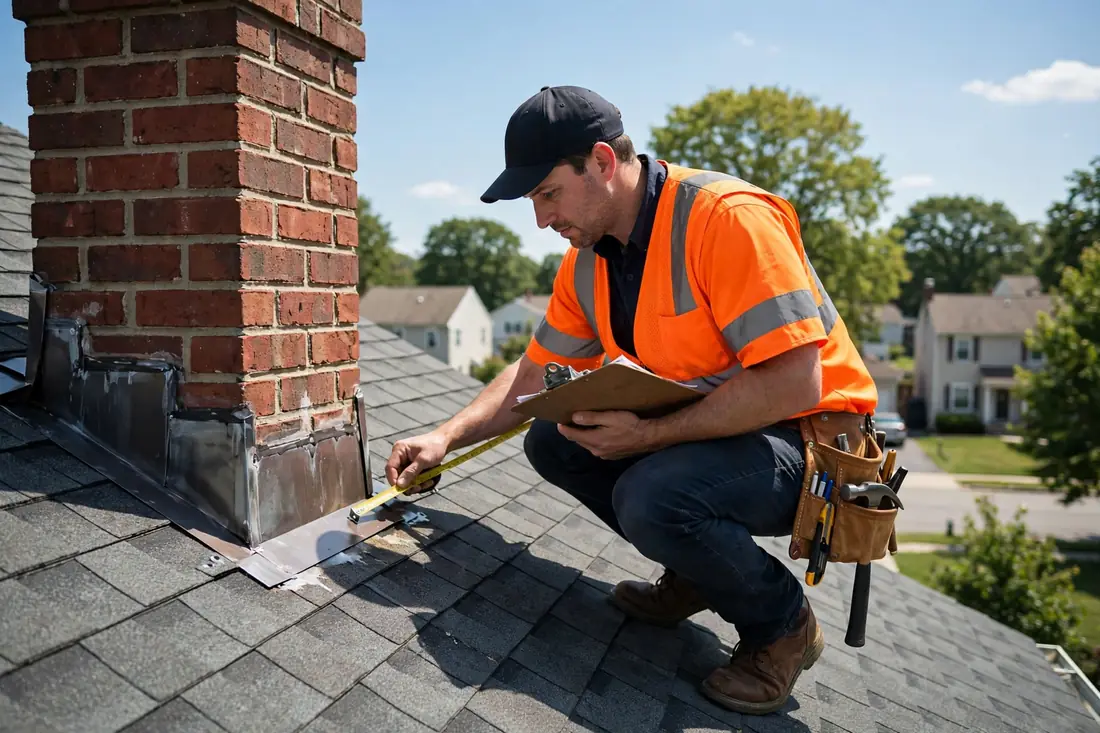
A full condition report for your roof — surface, flashing, deck indicators, attic, and ventilation — so repair, replacement, and storm decisions rest on evidence instead of guesses.
Explore Roof Inspection →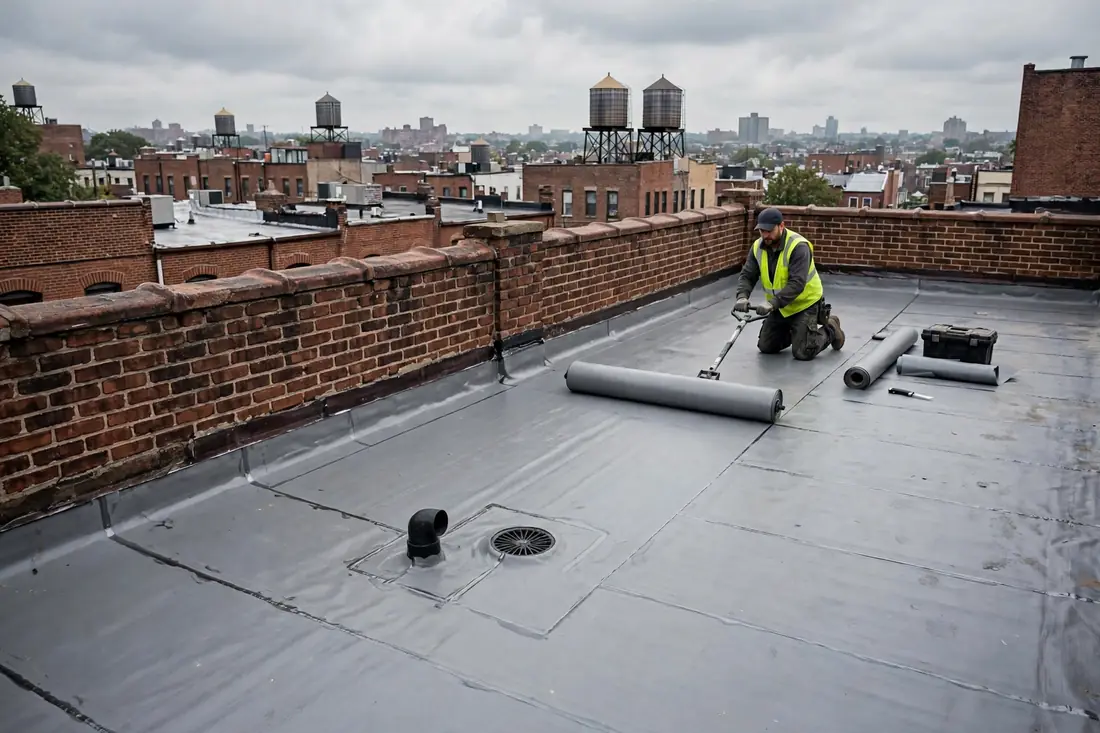
Membrane flat roofing for New Jersey's rowhouses, additions, porches, and low-slope sections — seams, drains, and ponding handled the way flat roofs actually demand.
Explore Flat Roofing →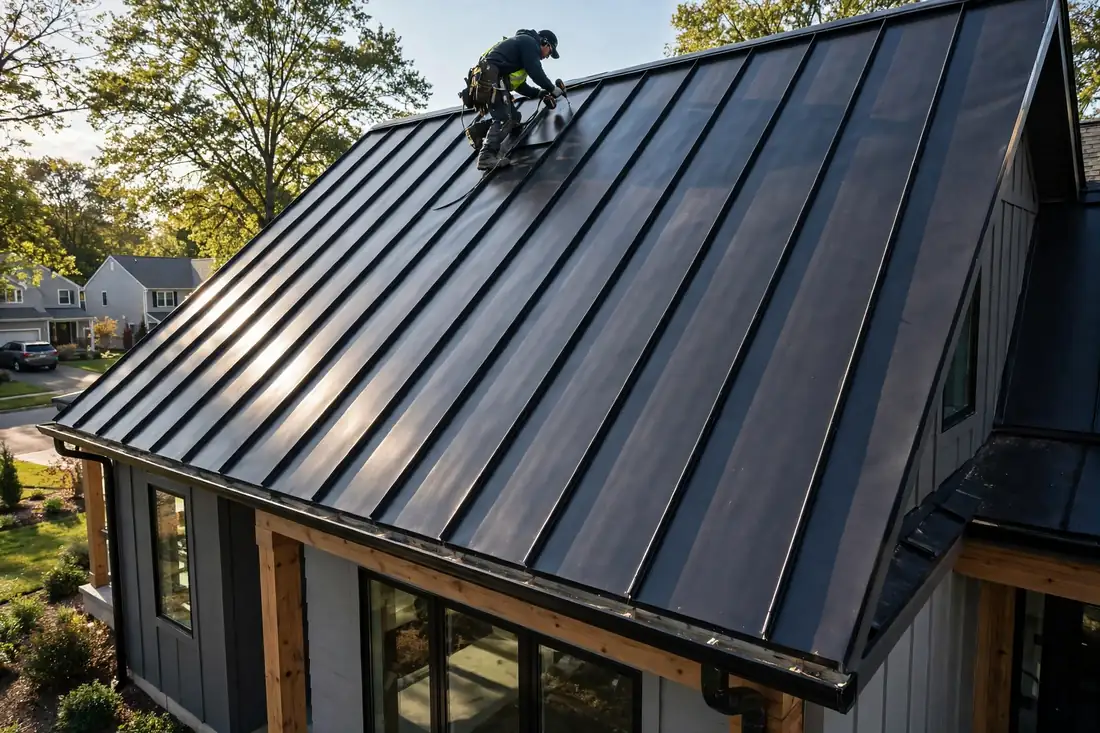
Standing seam and metal shingle roofing for New Jersey homes that want a decades-long roof — snow-shedding, wind-tough, and detailed around chimneys and valleys by craftsmen.
Explore Metal Roofing →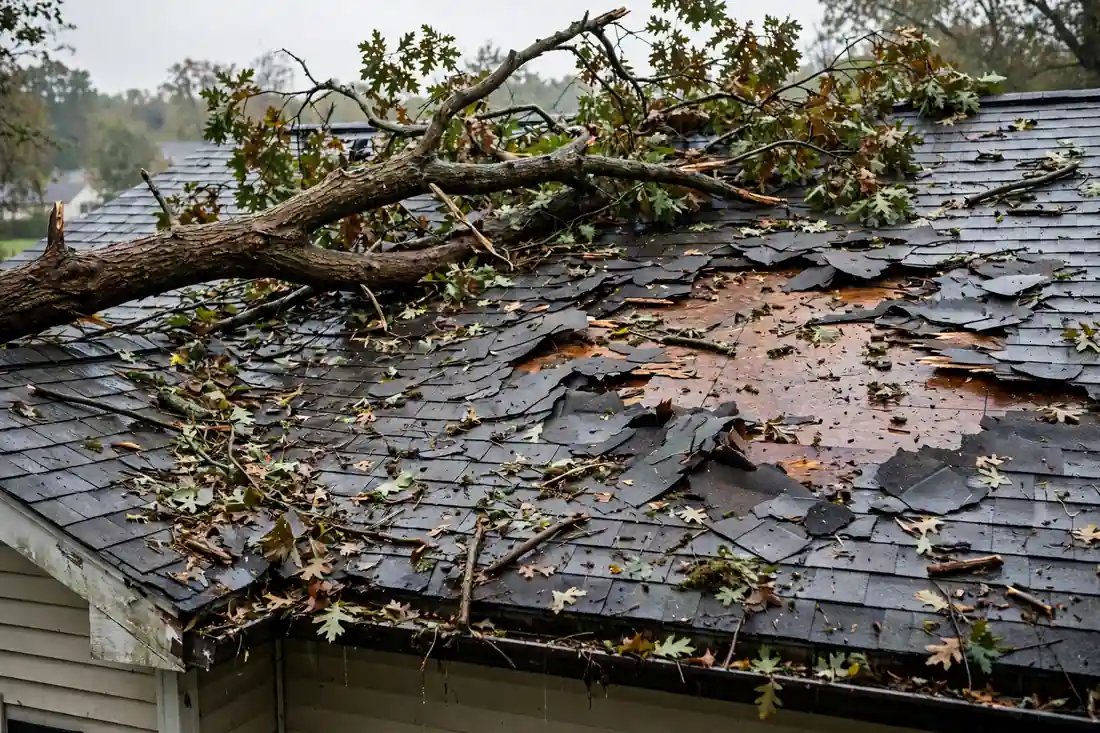
Post-storm roof repair for New Jersey homes — wind-torn shingles, fallen limbs, hail bruising, and water entry, documented properly and repaired permanently after the emergency pass.
Explore Storm Damage Roof Repair →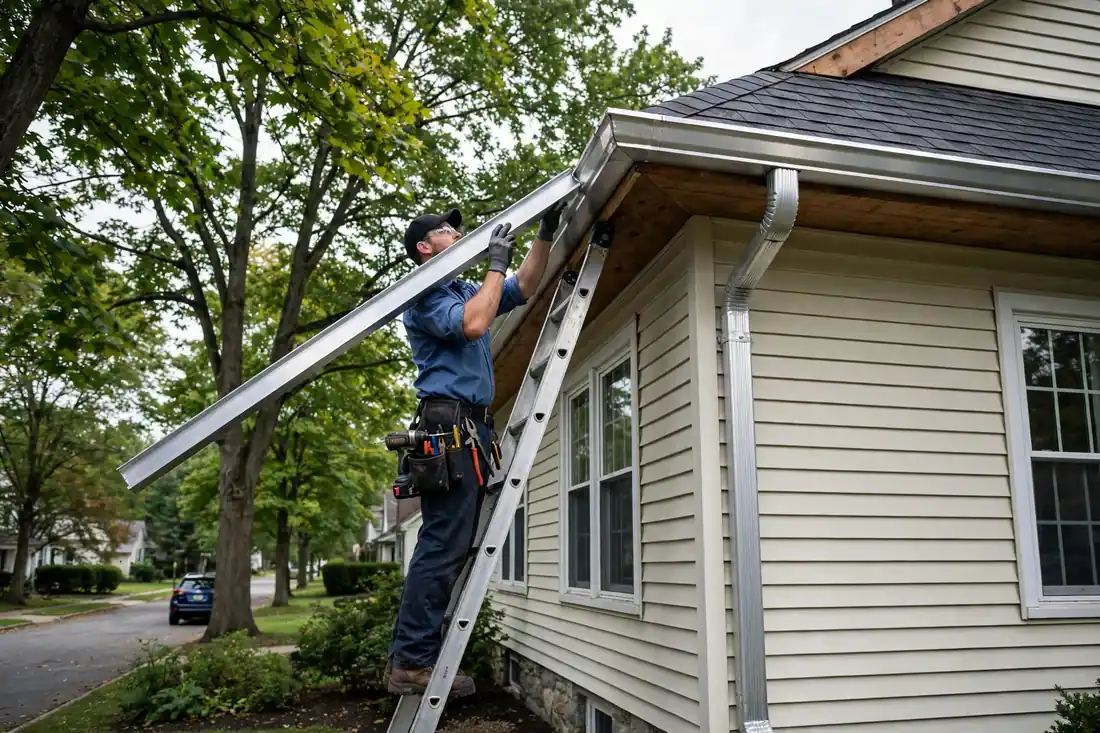
Seamless gutter installation and replacement sized to New Jersey roof lines — moving storm water off the roof and away from the foundation, with downspouts that actually keep up.
Explore Gutter Installation →One call connects you with a local New Jersey roofing professional — describe the roof, hear the plan, decide with evidence in hand.