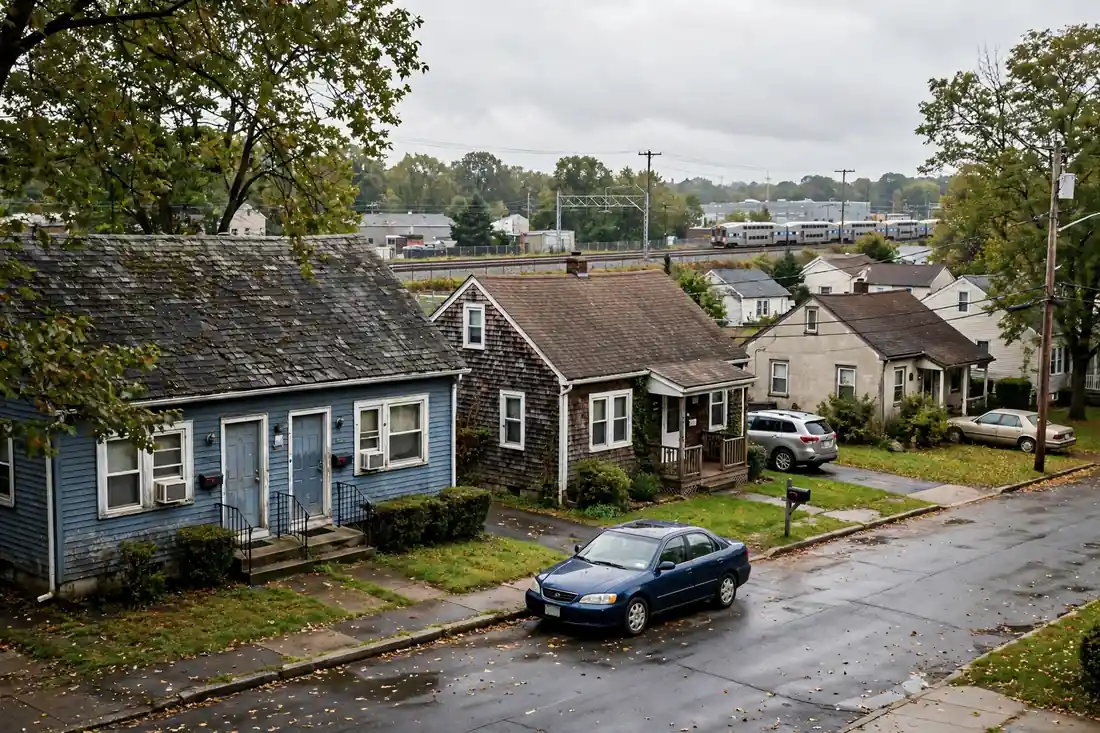
Wind-damaged shingle fields
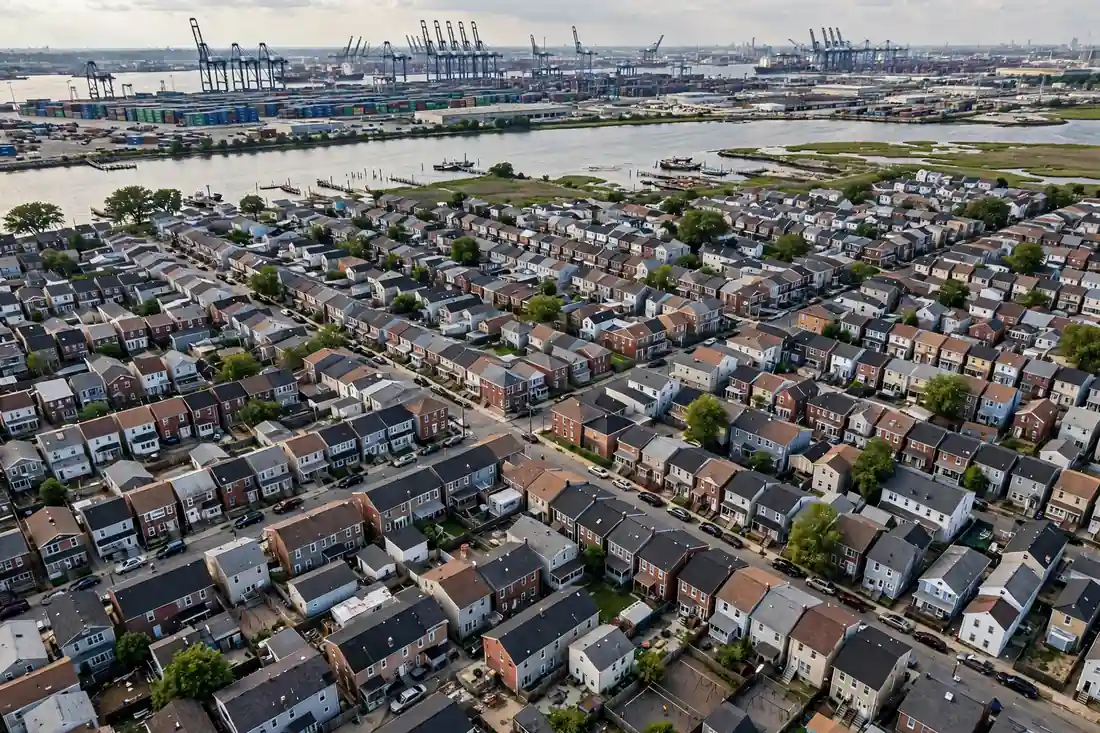
Creases, lifted seals, and missing pieces across windward slopes — a field that looks mostly fine and fails progressively from this storm forward.
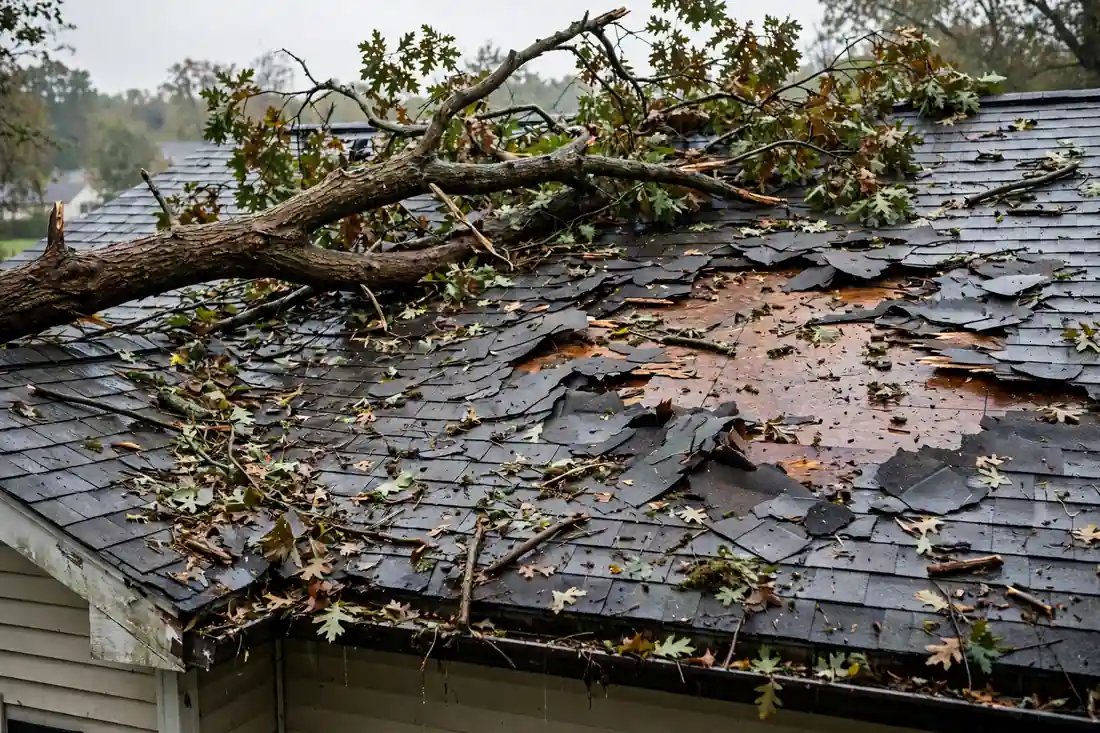
Post-storm roof repair for New Jersey homes — wind-torn shingles, fallen limbs, hail bruising, and water entry, documented properly and repaired permanently after the emergency pass.
Active leak, storm damage, or a section open to the weather — call now and describe what you are seeing. You will be connected with a local roofing professional.
When the storm passes, the roof tells the story: shingles scattered across the lawn, a limb through the deck, seals lifted on the windward slope, a ceiling stain blooming in the hall. Storm damage roof repair is the permanent half of storm response — the work that follows emergency tarping, replacing what the weather broke, correcting what it loosened, and documenting everything so the record supports whatever insurance conversation you choose to have.
The local roofing professionals in this network do this work in the storm's own order: full damage inspection first (including the damage that hides), then a repair plan that restores the roof as a system — not just the visibly broken square footage. Wind that took one section has usually tested every seal on the roof, and a repair that ignores that fact schedules the next leak.
Shingles folded back by gusts show a white crease line across the mat — the shingle may lie flat again, but its structure is broken and its days are numbered.
Wind that did not remove shingles often broke their sealant bonds. A slope of unsealed shingles looks intact and behaves like a deck of cards in the next storm.
Hail and driven debris dent shingles and fracture the mat beneath the granules — damage you feel with a palm more than see with an eye.
Limbs scrape granules off in arcs, puncture decking at their points, and bend flashing on their way down. One limb usually leaves three kinds of damage.
A post-storm inspection works the roof in zones: the windward slopes where gusts did their lifting, the leeward details where turbulence worried the flashing, and every point debris touched. Seals are tested by hand across whole slopes, not spot-checked; creased shingles are mapped; mats are felt for fractures under intact-looking granules. The attic gets its own pass for punctures, daylight, and fresh moisture trails.
Documentation is built into the same visit: dated photographs of each damage type in place, a slope map of findings, and a written summary a homeowner can hand to an insurer. That record is perishable — temporary repairs and weather erase it — so the assessment belongs in the first dry days after the storm, before the permanent work begins.
New Jersey storms arrive in families, and each writes a signature on roofs. Hurricanes and tropical remnants — Sandy remains the benchmark — combine hours of wind with flooding rain, taking ridge caps and whole windward sections. Nor'easters work slower: days of gusts that fatigue seals until a slope lets go at hour thirty. Summer thunderstorms drop limbs and hail in narrow, violent paths through the suburbs, and winter storms load roofs with snow, then ice.
The response calendar is local knowledge too. After a regional event, every roofer's phone rings at once; the homeowners who fare well are those who got documented early, tarped correctly (or were lucky), and had the permanent scope written while the evidence was fresh. Local crews triage by severity — open roofs and active leaks first — and a precise description of your damage when you call puts you in the right place in that line.
Creases, lifted seals, and missing pieces across windward slopes — a field that looks mostly fine and fails progressively from this storm forward.
Limb strikes crack decking and sometimes framing, damage that hides under intact-looking shingles around the impact point.
Ridge caps are wind's favorite handle; flashing bends under debris and lifts under gusts, opening the roof's most leak-prone joints.
Storm damage and rain arrive together. Every opening found late is a ceiling, insulation, and decking problem compounding quietly below.
Permanent storm repair restores the system the storm attacked:
Not just the obvious hole — every slope's seals, every detail the wind touched, plus the attic's evidence.
Photographs and a written map of the damage as found, preserved for your records and any claim you file.
Materials, decking policy, and the boundary between repair and any section the damage has genuinely ended.
Seals, flashing, and ridge renewed wherever the storm tested them, so the repair ends the storm's story instead of pausing it.
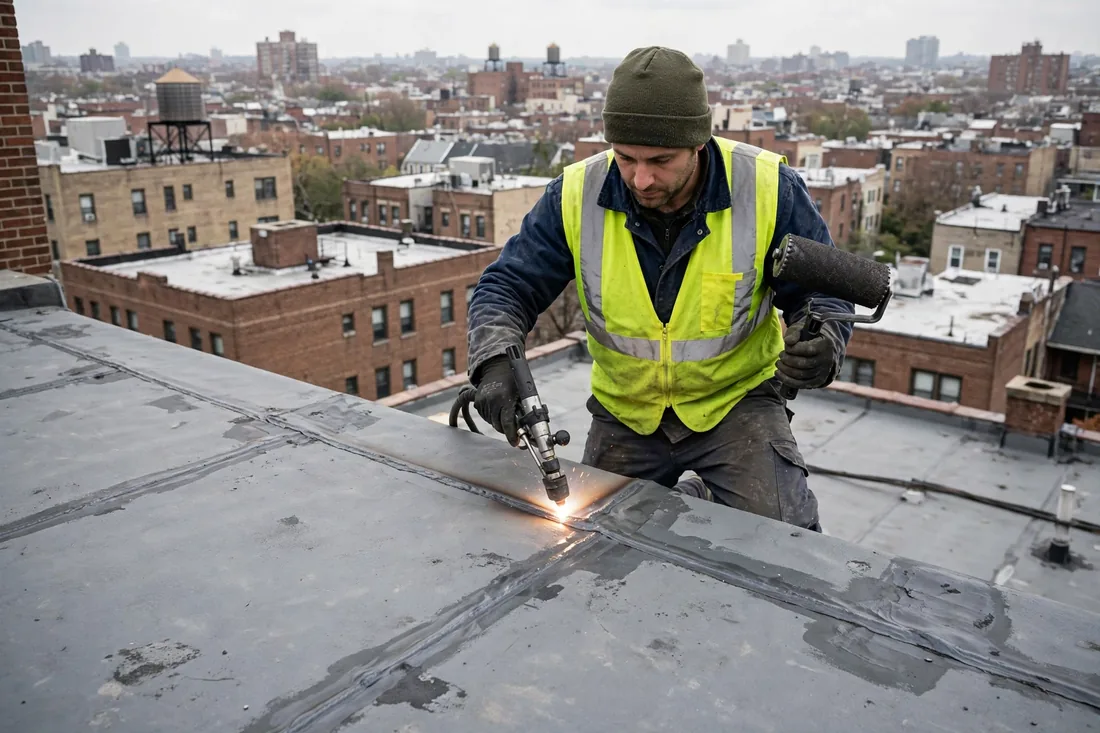
The measure of a storm repair is the next storm. Seals should hold, the repaired sections should shed water indistinguishably from the rest of the roof, and the old interior stains should stay frozen in size. Keep the documentation bundle — inspection photos, scope, invoices — with your home records; it is the roof's medical history, and it speaks in every future transaction, claim, or service call.
If the storm exposed a roof already near its end, the repair conversation may honestly become a replacement conversation. A good roofer shows you the evidence for either path — how much sound roof remains, and for how long — and lets the numbers, not the moment's stress, make the call.
The creased shingles and broken seals that doom a roof next season are invisible from the driveway. Ground-level scoping is how storm damage gets 'fixed' twice.
Temporary covers degrade in weeks. A spring storm's tarp still in place at Thanksgiving is a deck-rot project in progress.
Undocumented damage cannot support a claim or a resale disclosure later. Fifteen minutes of photographs at the start protects every option.
After big storms, out-of-area crews canvass hard. A local roofer with a written scope, documentation, and a reputation on your streets is the safer signature.
When the storm merely finished what age started, honest counsel is replacement. Repeated storm patches on a spent surface spend the replacement budget in installments.
Dead and overhanging limbs are the puncture inventory of the next storm. An arborist's pass in calm weather removes most of it.
The lifted ridge cap and tired flashing you already know about are where wind starts. Small scheduled repairs deny storms their first handhold.
An inspection report with photos, made in a quiet season, turns post-storm documentation from archaeology into comparison.
What fell, what is missing, whether water is coming in — the description triages your call correctly, especially in the busy days after a regional storm.
The roof and attic are examined zone by zone, damage photographed and mapped, and the permanent scope written from the evidence.
Any opening not yet secured is tarped to professional standard so the house is dry while the permanent work is scheduled.
Damaged materials replaced, details rebuilt, seals restored — then a walkthrough with the documentation bundle handed over.
Local roofing professionals for storm damage roof repair serve Newark and fifteen more New Jersey cities. Choose your city for local detail:
Either works, but documentation order matters: the damage should be professionally photographed and mapped before permanent repairs disturb it. Many homeowners start with the roofer's inspection, then file with a complete evidence bundle in hand. The claim decision and its handling are yours; the roofer supplies the record.
It depends on spread and age. A sound roof with one damaged slope is a repair. Damage across most slopes, or on a roof already at end of life, may make replacement the honest scope — the inspection evidence, slope by slope, is what decides.
Wind folds a shingle back until its mat cracks along the fold, then lays it down again. The crease is a fracture: that shingle will fail early and its seal is broken. Creases are found by hand and eye on the roof, not from the ground — a core reason post-storm inspections exist.
As soon as conditions are safe and the roof is dry enough to walk — ideally within the first days. Evidence degrades, temporary fixes blur it, and the repair queue after a regional storm rewards the early and the documented.
Wind-driven rain reaches openings that ordinary rain cannot — lifted seals, ridge gaps, flashing joints — and storm pressure can push water through paths that stay dry in normal weather. The leak is real evidence of a specific weakness; the inspection hunts by the storm's direction, not the stain alone.
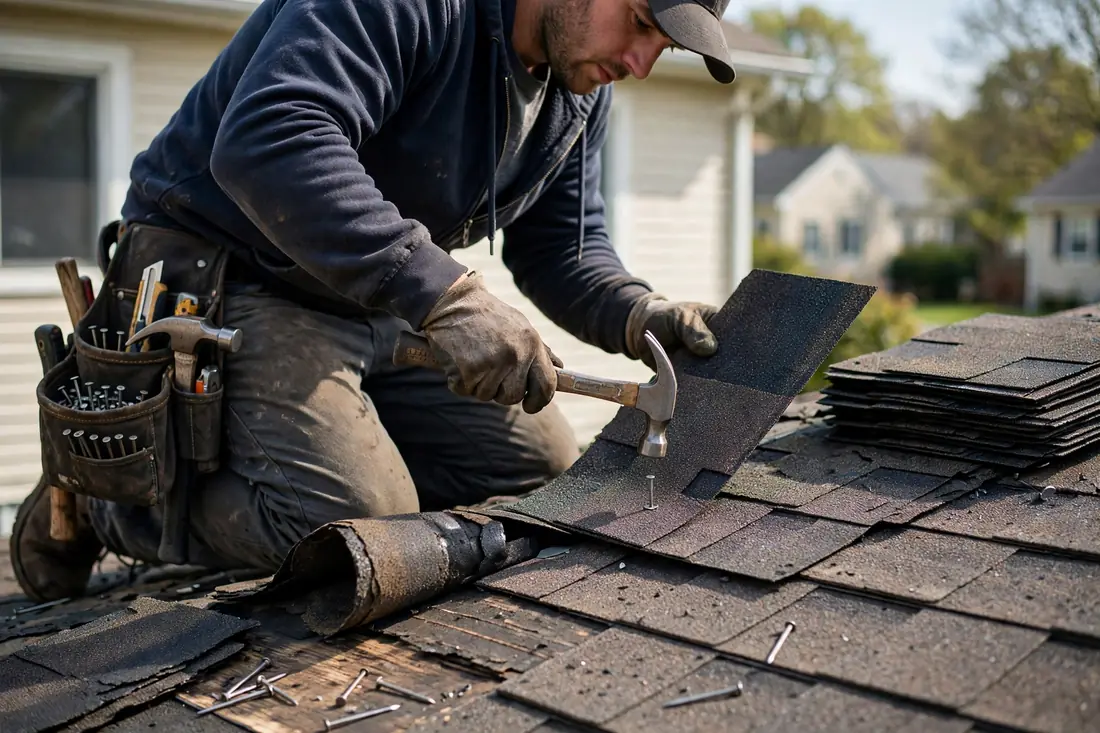
Targeted repairs for the failures New Jersey roofs actually develop — lifted shingles, tired flashing, worn pipe boots, and small leaks caught before they reach the ceiling.
Explore Roof Repair →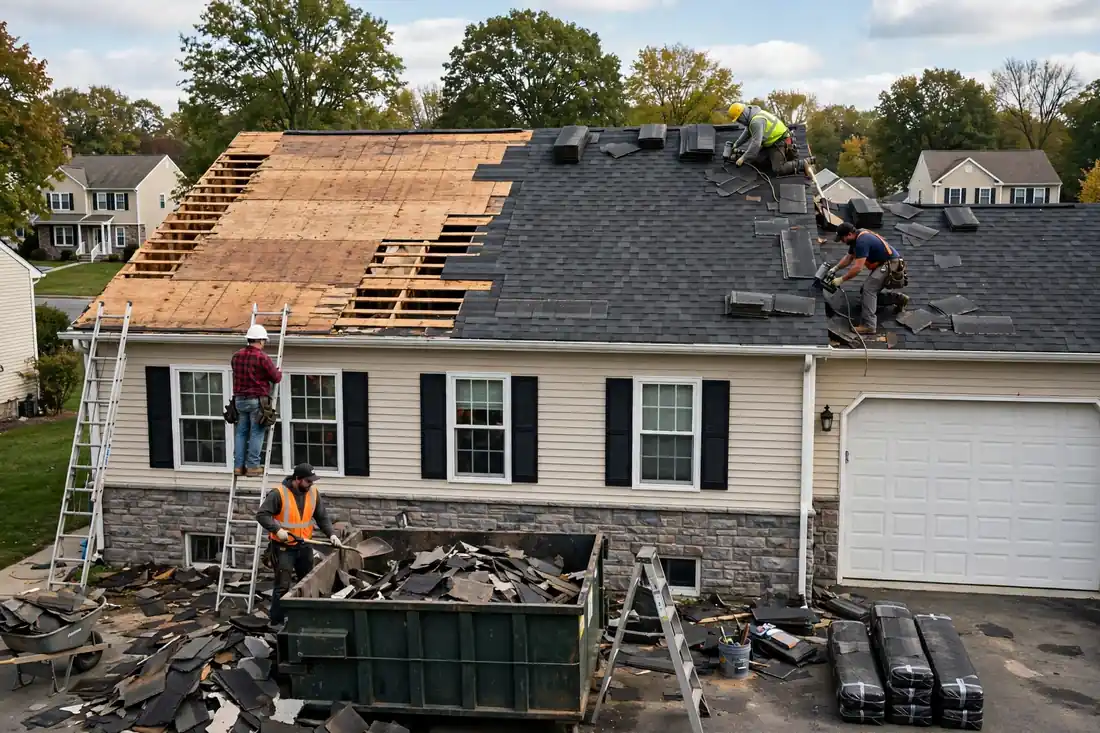
Full tear-off and re-roofing for New Jersey homes whose shingles have reached the end of their service life — deck inspection, modern underlayment, and a roof built for nor'easters and freeze-thaw.
Explore Roof Replacement →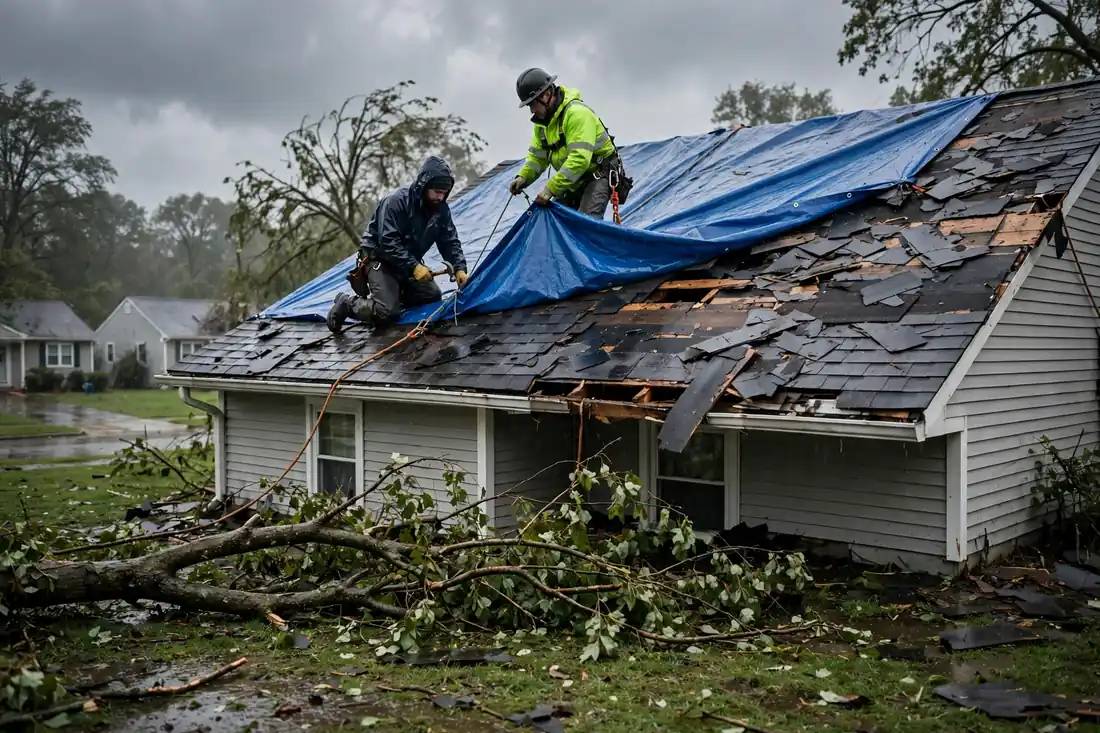
When a storm opens your roof — fallen limbs, torn-off shingles, active leaks — the first job is stopping the water. Emergency tarping, temporary sealing, and the permanent repair that follows.
Explore Emergency Roof Repair →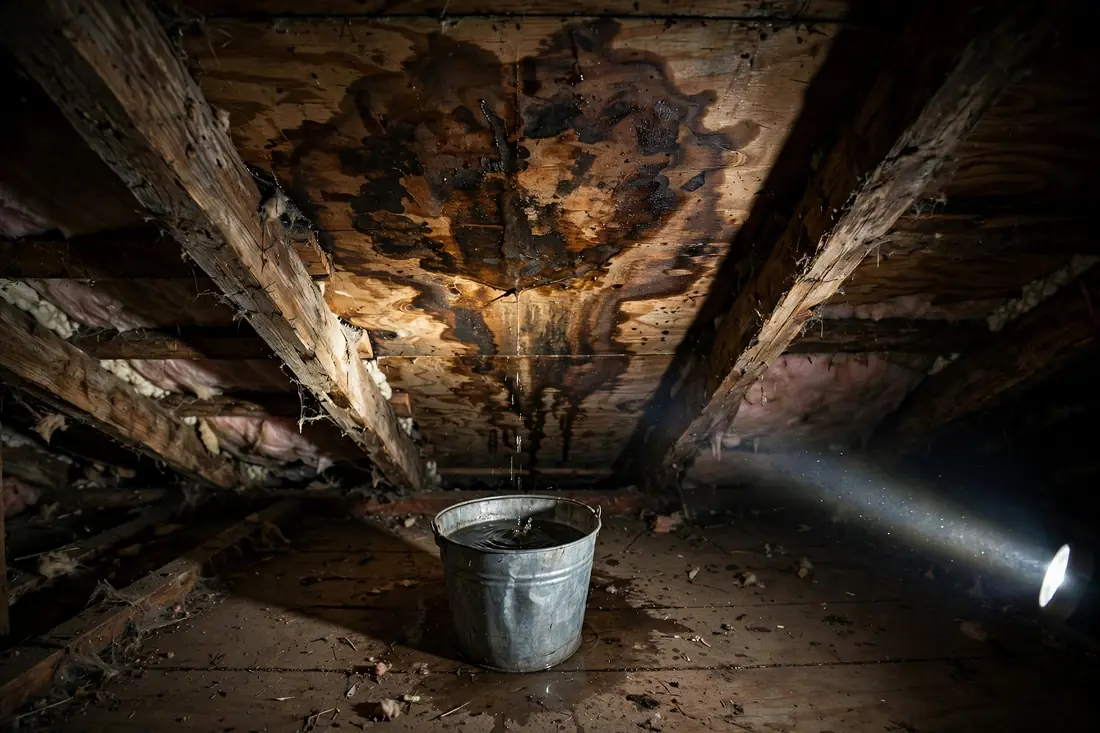
Leak detection and repair that starts where the water starts — tracing stains back through the attic to the failed flashing, boot, or seam that let the water in.
Explore Roof Leak Repair →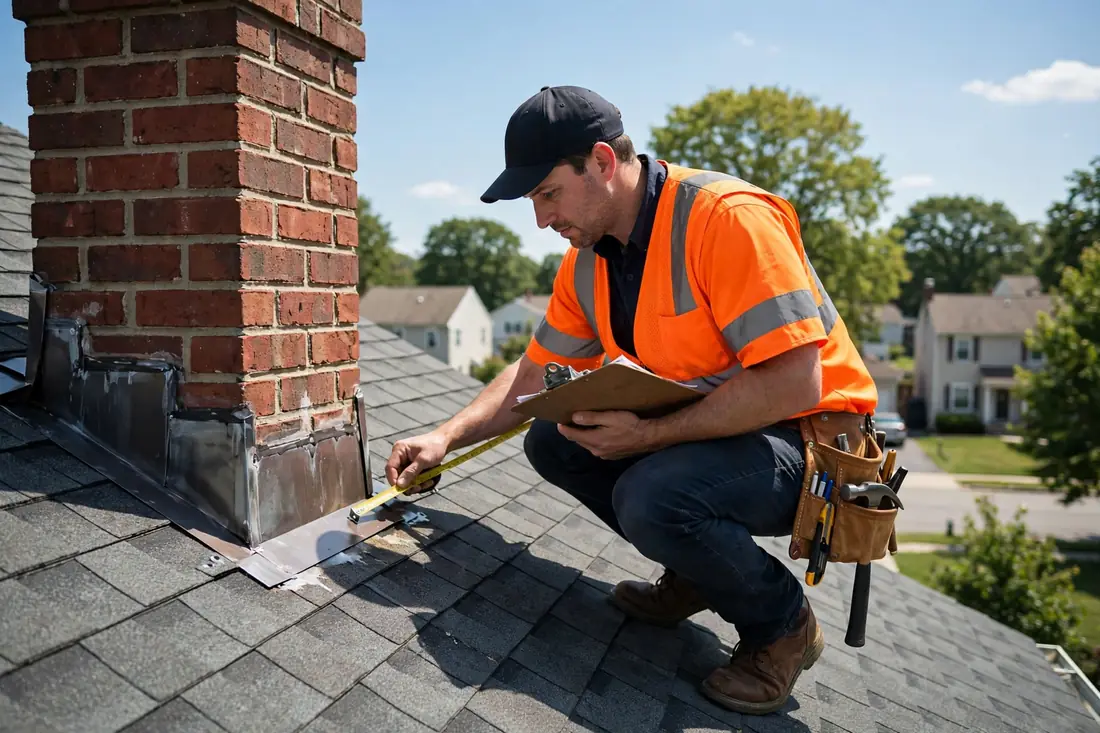
A full condition report for your roof — surface, flashing, deck indicators, attic, and ventilation — so repair, replacement, and storm decisions rest on evidence instead of guesses.
Explore Roof Inspection →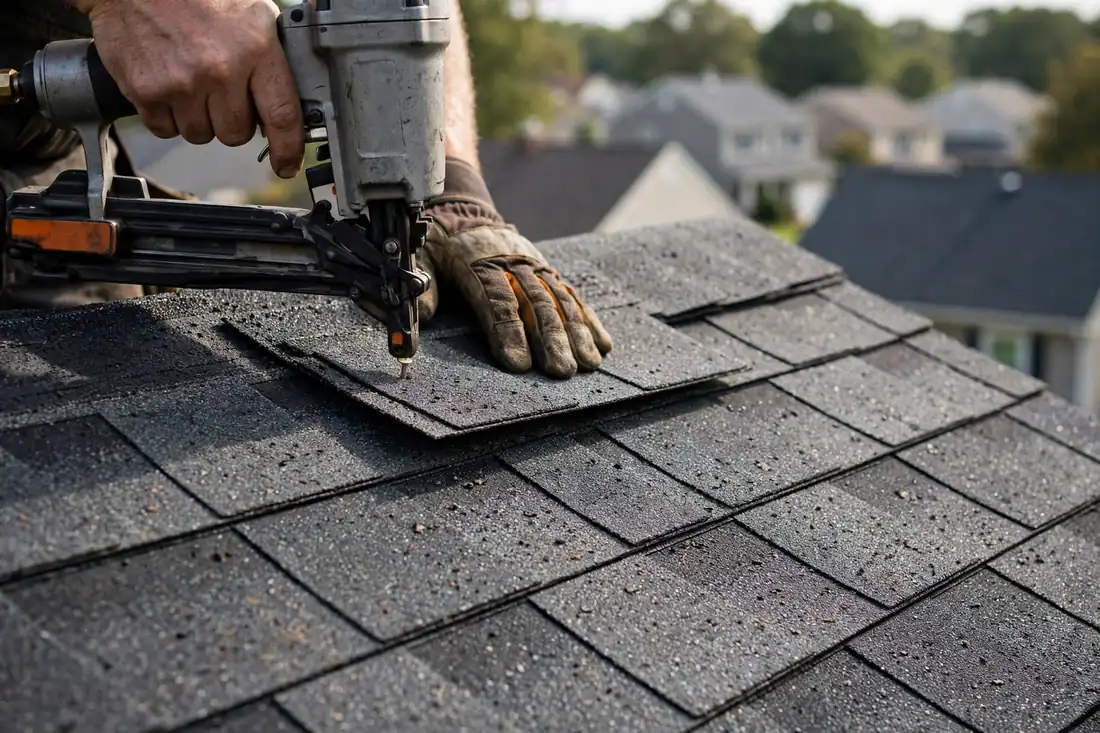
Architectural asphalt shingle installation and replacement — the workhorse roof for New Jersey homes, detailed for wind, ice, and summer heat, in the profiles and colors that suit each neighborhood.
Explore Shingle Roofing →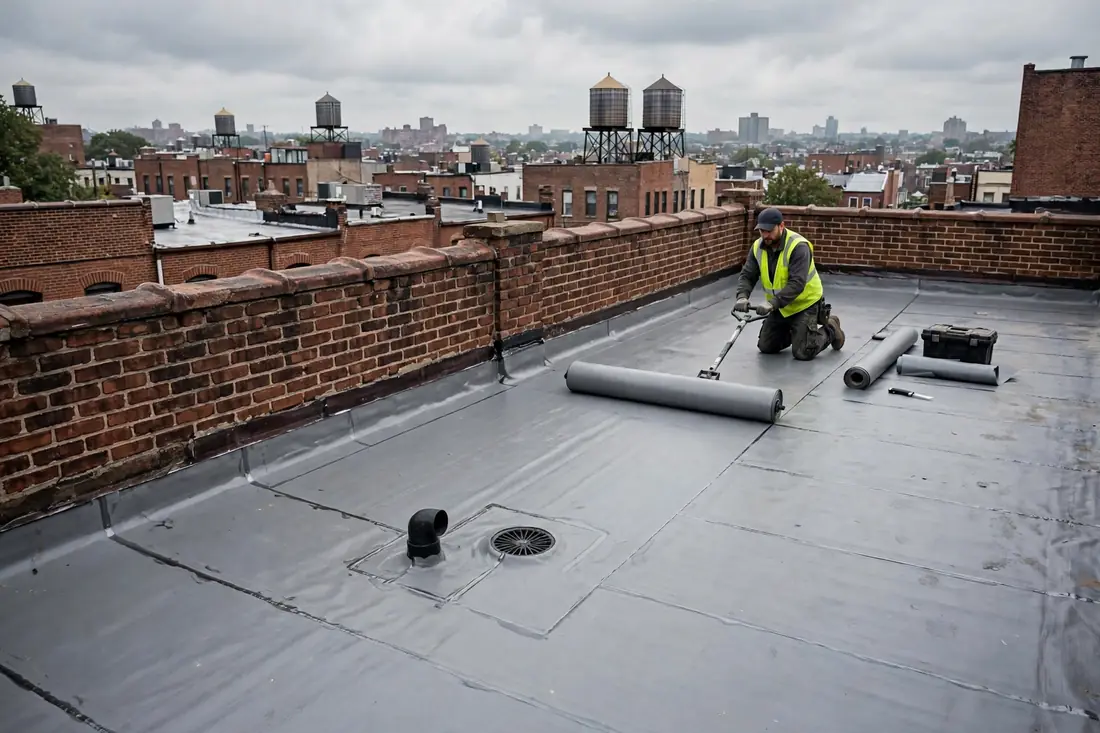
Membrane flat roofing for New Jersey's rowhouses, additions, porches, and low-slope sections — seams, drains, and ponding handled the way flat roofs actually demand.
Explore Flat Roofing →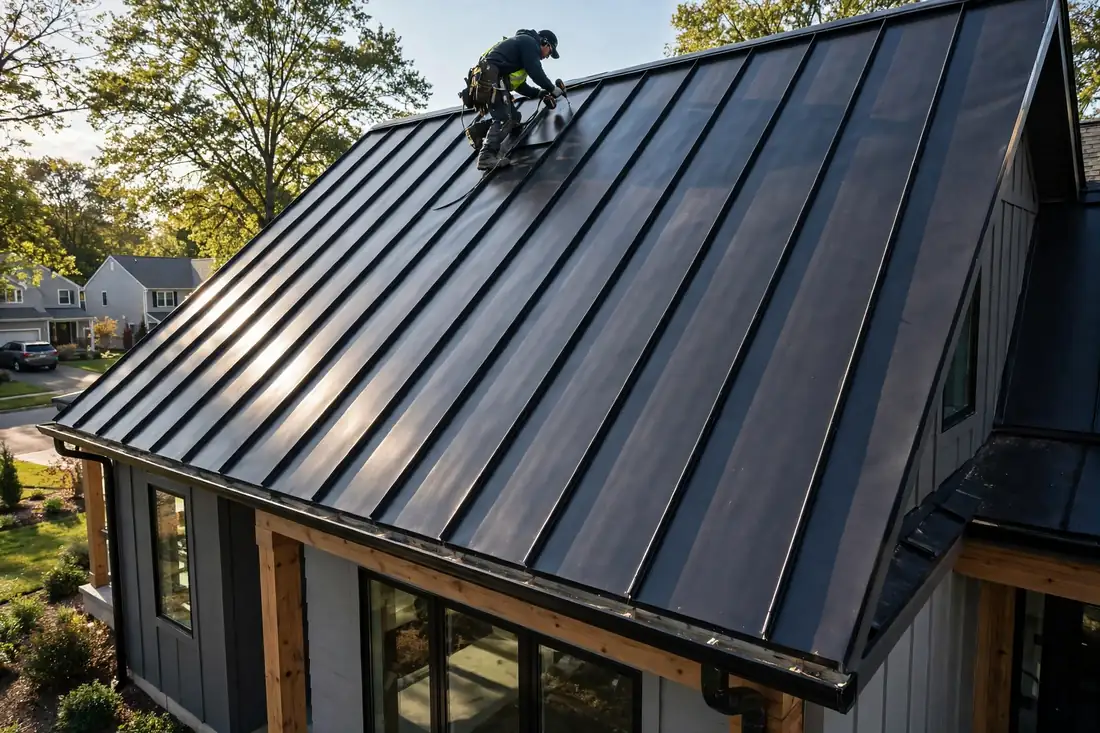
Standing seam and metal shingle roofing for New Jersey homes that want a decades-long roof — snow-shedding, wind-tough, and detailed around chimneys and valleys by craftsmen.
Explore Metal Roofing →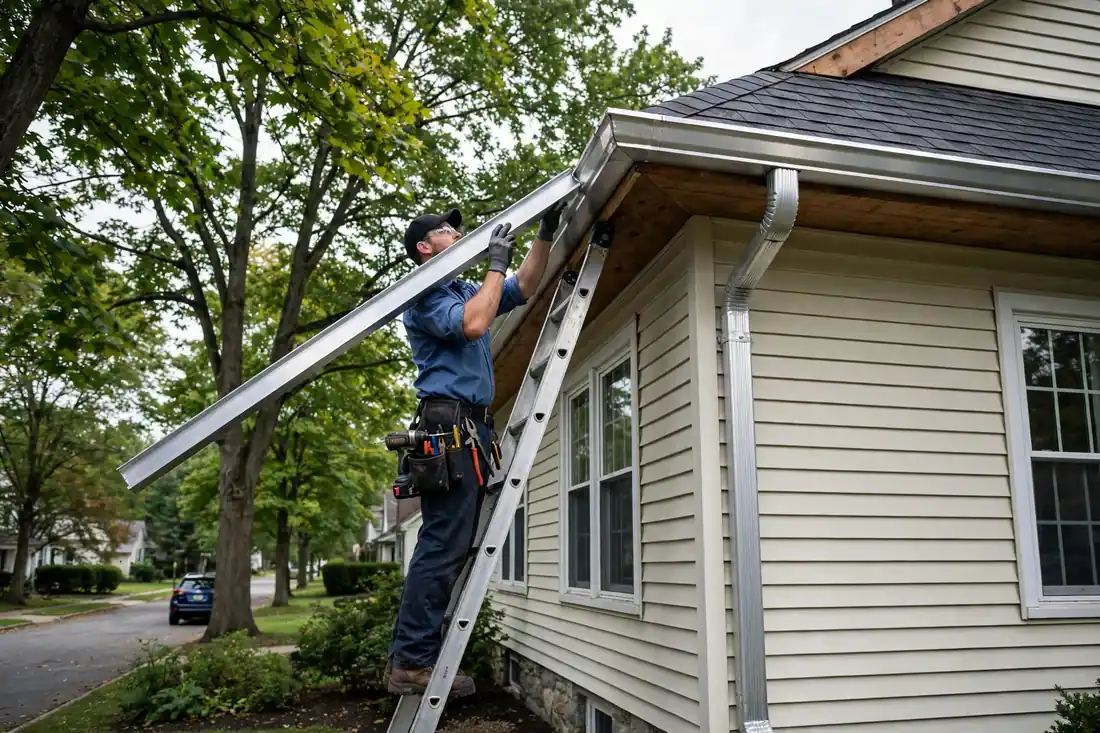
Seamless gutter installation and replacement sized to New Jersey roof lines — moving storm water off the roof and away from the foundation, with downspouts that actually keep up.
Explore Gutter Installation →One call connects you with a local New Jersey roofing professional — describe the roof, hear the plan, decide with evidence in hand.