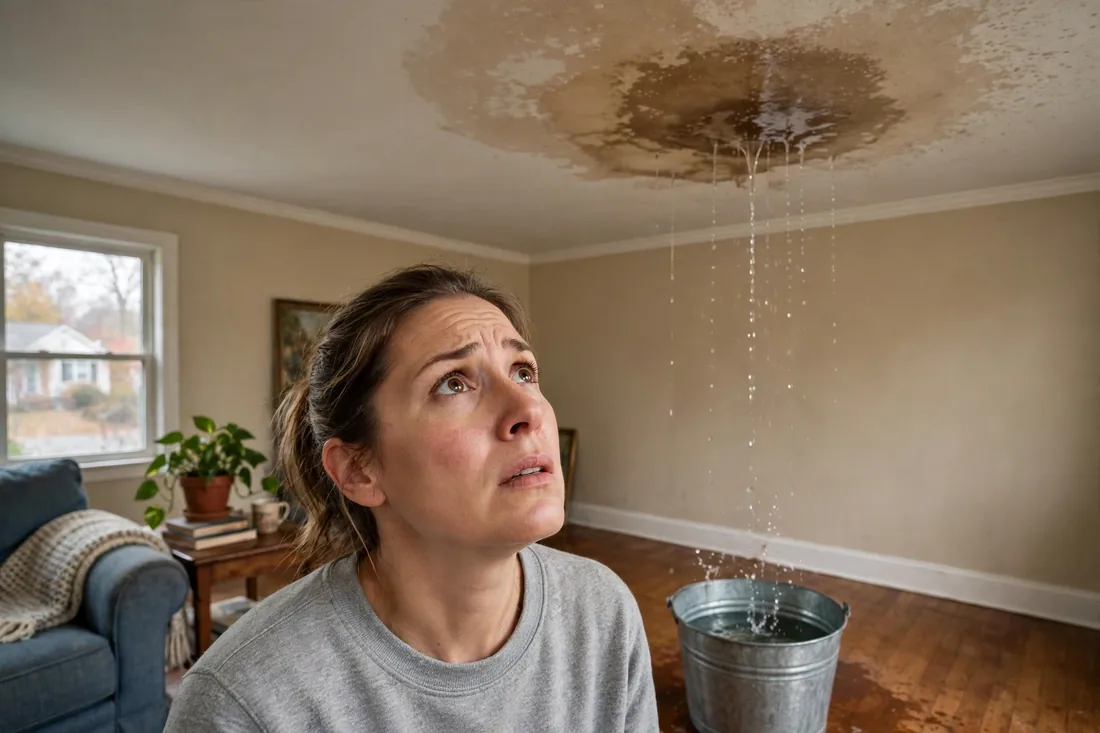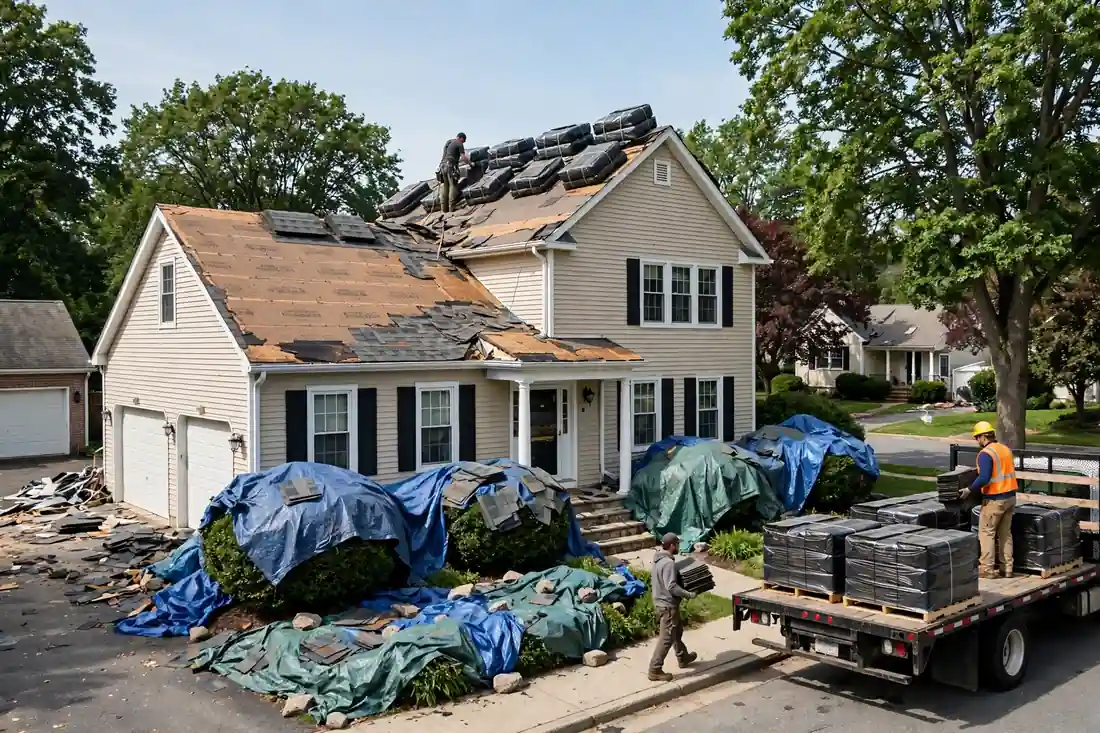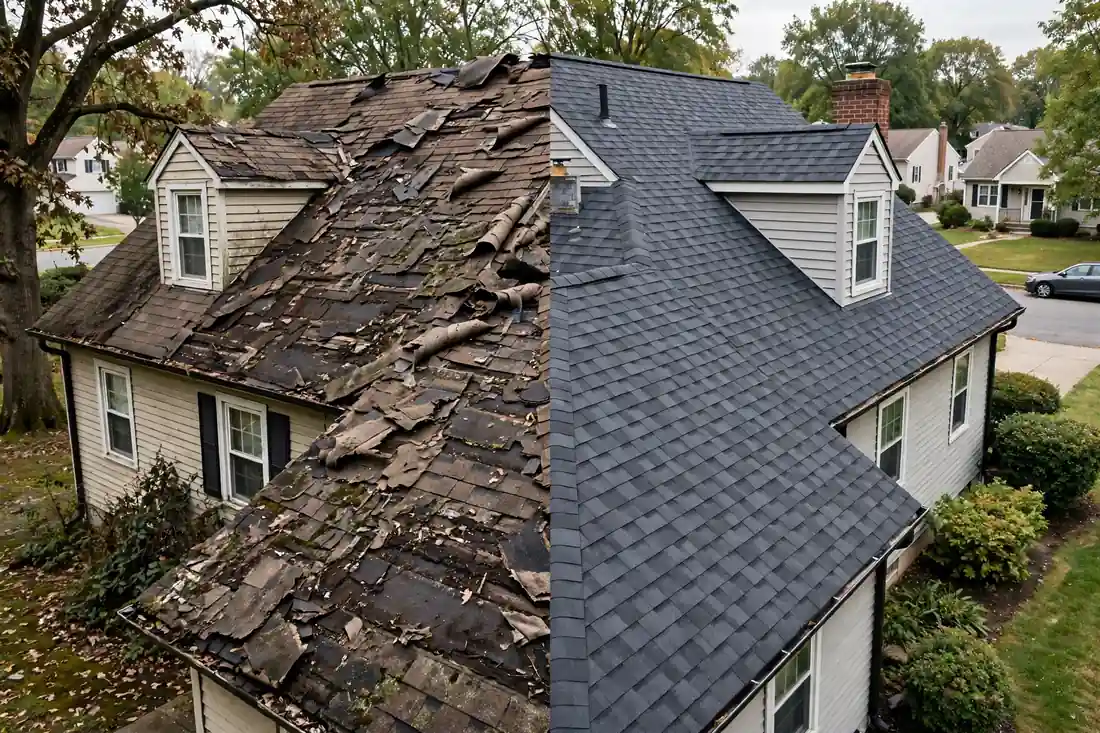
Every roofer has watched a homeowner pour a third repair into a roof that needed replacing — and another replace a roof that had a decade of service left in one failed boot. Repair-or-replacement is the central money question in roofing, and it is answerable: not by the age on a calendar or the worry of the moment, but by a handful of observable facts about your specific roof. This guide names those facts, so the next time the question arrives — and it always arrives during a leak — you can work it like an inspector instead of a gambler.
The framework has four inputs: the roof's age and material, the spread of its problems, the condition of what lies beneath, and the pattern of its repair history. Take them in order.
Input 1: Age — a range, not a verdict
Asphalt shingle roofs in New Jersey commonly serve twenty to twenty-five years; architectural shingles toward the longer end, older three-tab toward the shorter. A nine-year-old roof with a leak is a repair, essentially always — something specific failed. A twenty-three-year-old roof with a leak is a question. Age sets the prior; it never settles the case alone, because exposure writes its own schedule: a shaded, well-vented north-facing roof can be years younger in condition than its sun-baked twin across the street.
Input 2: Spread — one address or every street?
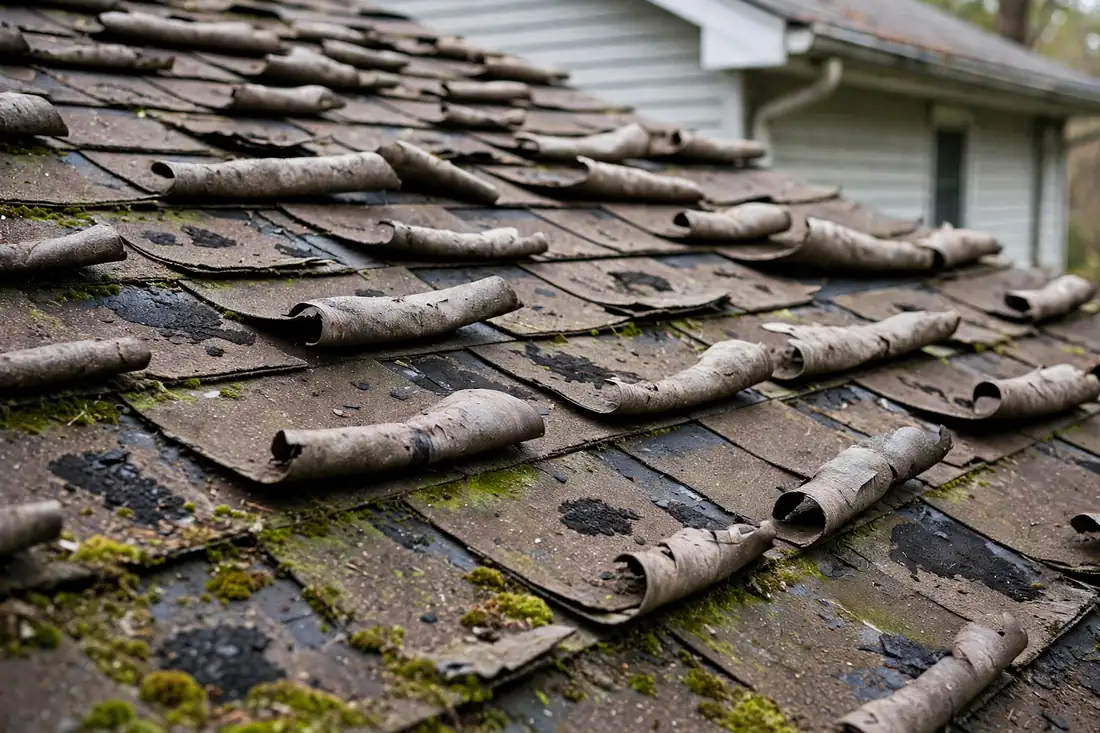
The single most decisive fact is whether the problem lives at one address or everywhere. A leak at one chimney, wear on one slope, damage from one limb: the roof has a local problem, and local problems get repairs. Granules shedding on every slope, curling across the field, leaks that migrate to new rooms each season: the material itself is finishing, and repairs become installments on a replacement you have not admitted to yet. Ask the roofer to answer in those terms — how many slopes, how many systems — and the decision usually makes itself.
Input 3: The deck and the attic — the hidden half
Surface judgments lie; the attic does not. Decking that is sound and dry under a worn surface supports repair and even partial renewal. Decking that is stained in several bays, soft at the eaves, or carrying years of moisture evidence argues that the roof's problems have been structural for a while — and that replacement, with the deck opened and corrected, is the honest scope. Any repair-or-replace verdict given without an attic look is a guess wearing a uniform.
Input 4: Repair history — the slope of the line
One repair in twelve years is maintenance. Three repairs in three years, in different places, is a trend — and trends in roofing do not reverse. Plot your own history honestly: if each season brings a new address for water, the roof is telling you its system is spent, and the kindest reading of the evidence is to plan the replacement on your schedule — a chosen autumn, a written scope — rather than meeting it as a February emergency.
The math that actually matters
Compare like with like: the scope of a repair against the years it credibly buys on this roof. A modest flashing repair that restores a sound fifteen-year-old roof buys a decade — money well placed. The same figure spent re-shingling one slope of a spent roof buys a season. Roofers who respect you will run this arithmetic out loud, with the condition evidence in front of you both. If the conversation is all urgency and no arithmetic, slow it down and get the inspection report first.
Special cases that bend the rules
Storm damage on a young roof is a repair even when it is large — the system around it is sound. A single failed detail on an old roof can still be a repair if the field genuinely has years left; some twenty-year roofs do. Flat roofs flip the lens: their fields and their details age so differently that section renewal is a normal middle path. And a roof being prepared for sale follows transaction logic — documented condition and honest scope — more than longevity logic. The framework bends; it does not break.
Getting the verdict you can trust
Commission the evidence: a full inspection with photos, slope-by-slope findings, attic results, and a remaining-life estimate. With that document, repair-or-replacement stops being a negotiation and becomes a reading. New Jersey Roofing Help connects you with local professionals who produce exactly that report — call, describe your roof's age and symptoms, and start from evidence.