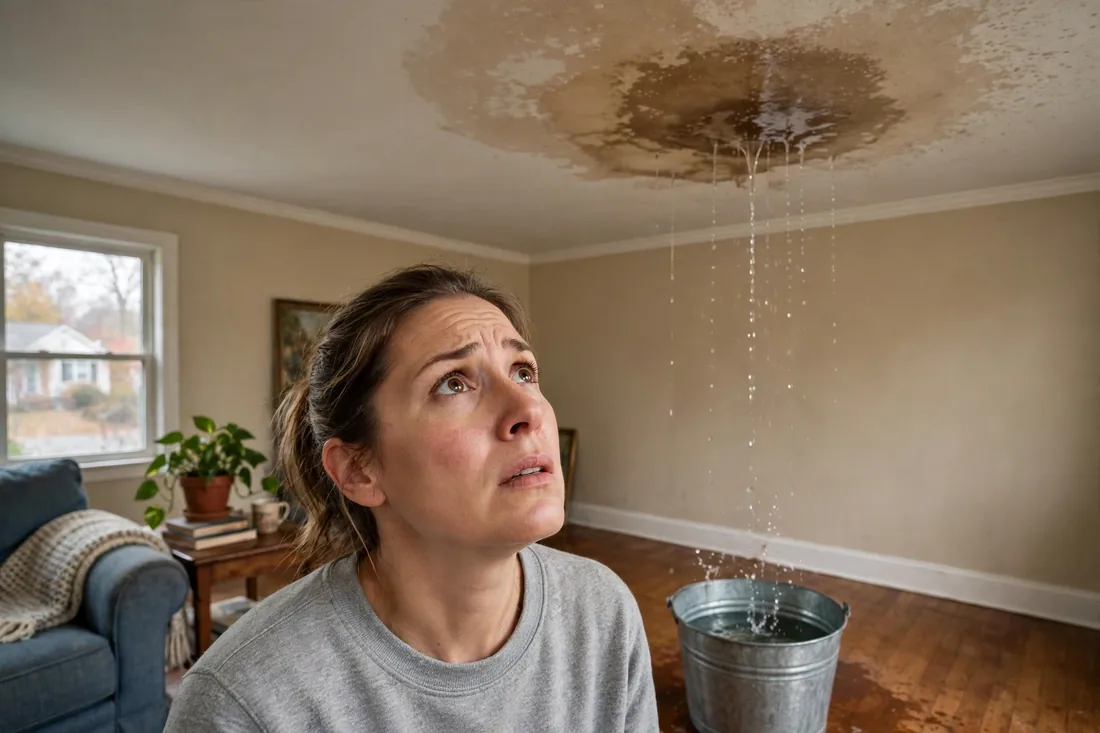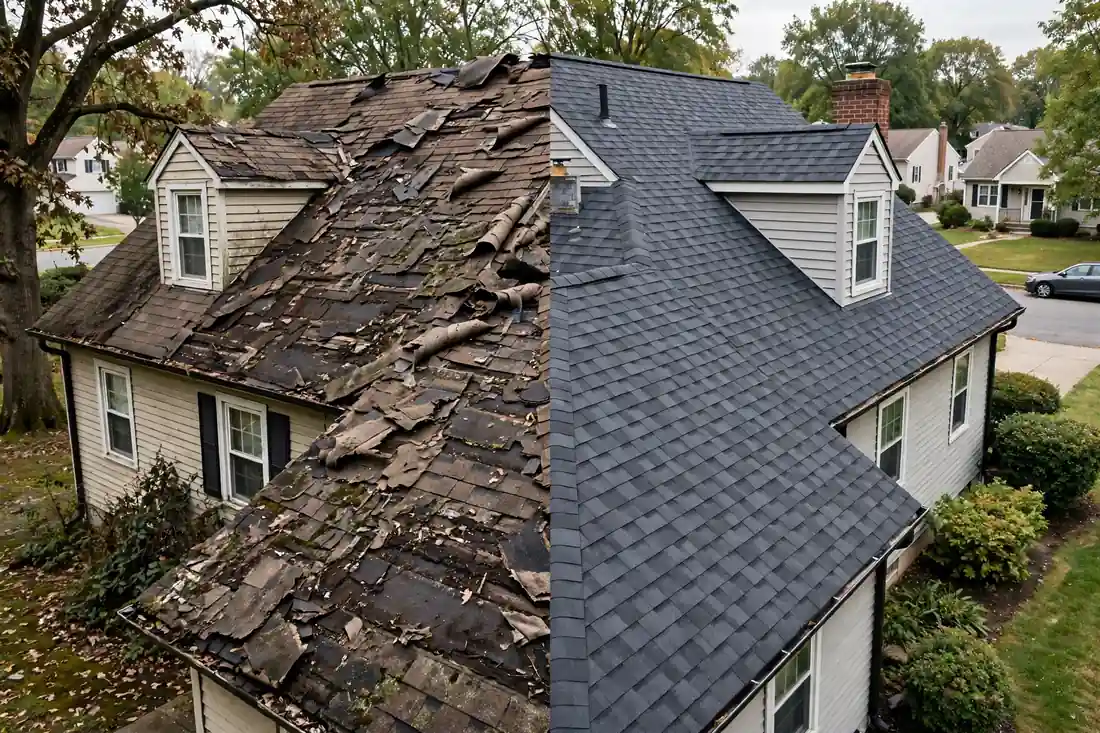
Roofs rarely fail suddenly. They retire gradually, in public, sending signals for years — in the gutters, on the surface, in the attic, on the ceiling — before the first drip makes it official. Homeowners who can read those signals get to replace a roof on their own schedule: a chosen season, a written scope, no water involved. This guide lists the ten signs that matter most on New Jersey homes, what each one actually means, and how fast each asks you to move.
Read them as a cluster, not a checklist of doom: one sign is information; three signs are a plan asking to be made.
1–3: The surface is spending itself
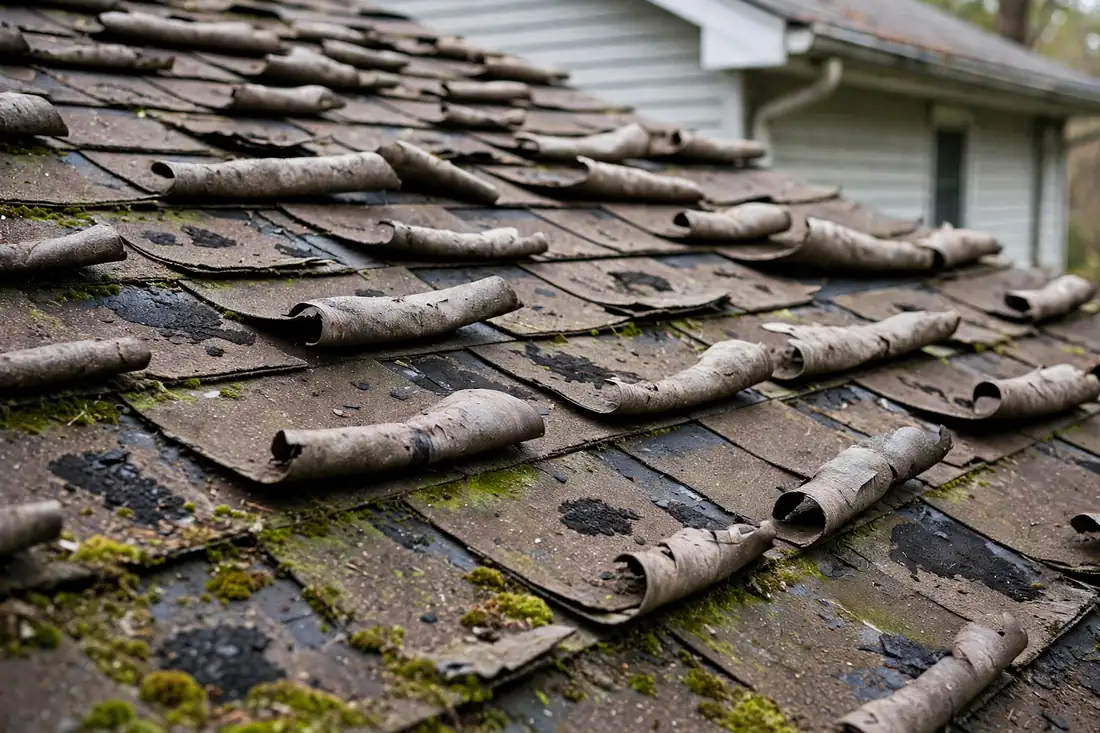
Granules by the handful. The gritty coating is the shingle's wear surface; when gutters and downspout exits deliver it in quantity after every rain, the asphalt beneath is exposed and aging in fast-forward. A new roof sheds a little excess for a few weeks — a mature roof shedding steadily is spending its substance. Curling, cupping, and clawing. Shingle edges that lift or curl under have lost the flexibility to lie flat and seal; they catch wind, crack in the cold, and mark a material at the end of its formulation's patience. Bald and shiny patches. Where the granules are gone entirely and the fiberglass mat glints through, that slope is in its last seasons — the most literal 'worn out' a roof can show.
4–6: The system is opening up
Missing shingles after ordinary wind. A sound roof keeps its shingles in weather that is not historic. Pieces in the yard after unremarkable storms mean the sealant system has retired before the shingles have — and every gap is an entry with an invitation. Cracked and brittle shingles. Shingles that snap rather than flex when lifted for inspection cannot be repaired around; brittleness across a field ends the repair era for that slope. Exposed nails and failed details everywhere. When boots, flashing, and fasteners are failing at several addresses at once, you are no longer maintaining details — you are chasing a system-wide sunset.
7–8: The structure is confessing
Daylight and stains in the attic. Pinpoints of light through the deck, water trails on rafters, and insulation that has been wet repeatedly mean the roof's failures have been structural news for some time. A sagging roofline. A dip between rafters visible from the street is the deck itself yielding — the one sign on this list that should move you from 'plan' to 'promptly,' because it concerns the structure, not just the surface.
9–10: The calendar and the ledger agree
The age is simply there. A New Jersey asphalt roof at twenty-two-plus years with any two other signs on this list is not being pessimistic; it is being statistical. The repairs have become a subscription. When the roofer knows your ceiling stains by name and each season opens a new file, the ledger has already voted: the installments you are paying are the replacement, arriving in the most expensive possible form.
What to do with the signs
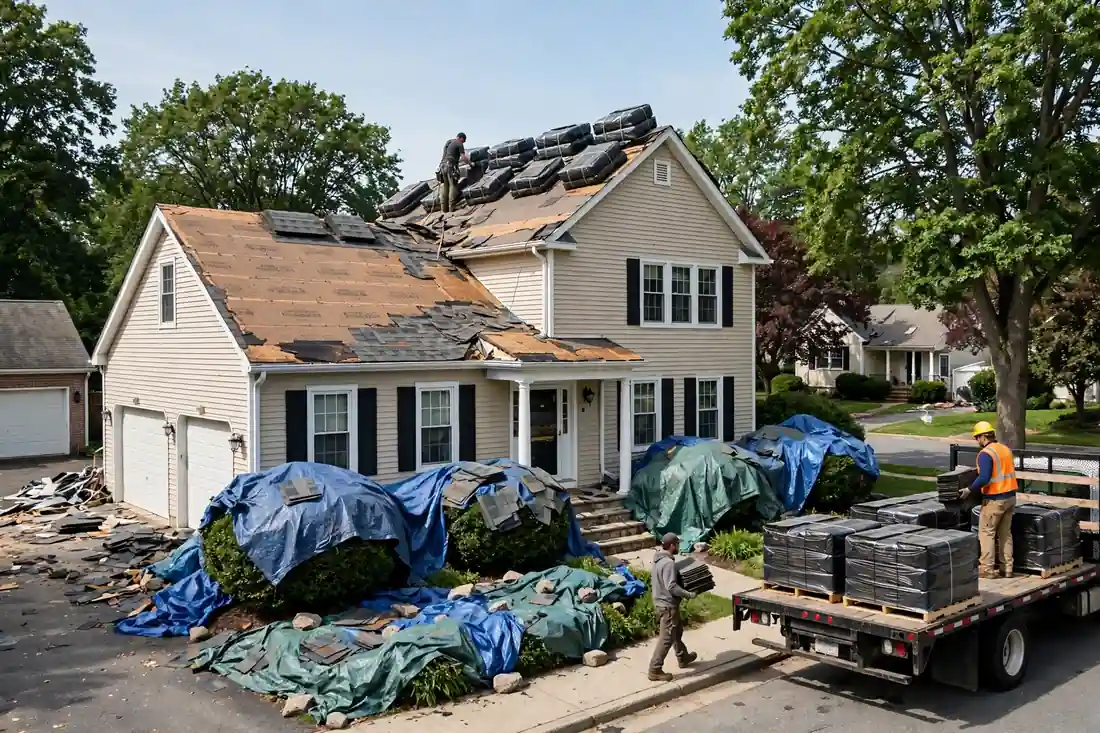
Count your cluster honestly, then get the document that settles it: a professional inspection with photographs, slope-by-slope findings, and a remaining-life estimate. With three or more signs, expect the conversation to be about timing and scope rather than whether — and take the win that is available: you are planning a replacement in fair weather, at your pace, instead of funding an emergency. Call New Jersey Roofing Help and describe your signs; the inspection that follows turns this list from reading into a plan.